Saturday, September 14, 2024

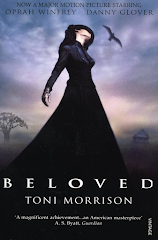
Beloved - Toni Morrison


Introduction :

Beloved, novel by Toni Morrison, published in 1987 and winner of the 1988 Pulitzer Prize for fiction. The work examines the destructive legacy of slavery as it chronicles the life of a Black woman named Sethe, from her pre-Civil War days as a slave in Kentucky to her time in Cincinnati, Ohio, in 1873. Although Sethe lives there as a free woman, she is held prisoner by memories of the trauma of her life as a slave.


Toni Morrison :


Early Life and Education

  1. Born Chloe Ardelia Wofford on February 18, 1931, in Lorain, Ohio.
  2. Raised in a working-class African American family; parents instilled cultural pride.
  3. Attended Howard University, where she studied English.
  4. Completed her master’s degree in English at Cornell University.

Career in Publishing

  1. Worked as an editor at Random House in the 1960s.
  2. Promoted African American literature, publishing key Black authors like Angela Davis and Muhammad Ali.

Literary Career

  1. The Bluest Eye (1970) – Her debut novel explored racial identity and beauty standards.
  2. Sula (1973) – Focused on friendship and community in a Black neighborhood.
  3. Song of Solomon (1977) – Gained critical acclaim, won the National Book Critics Circle Award, and explored African American folklore and identity.
  4. Beloved (1987) – Her most famous work, won the Pulitzer Prize, and addressed the psychological trauma of slavery.
  5. Jazz (1992), Paradise (1997), and A Mercy (2008) – Continued to explore African American history and social issues.

Nobel Prize

  1. In 1993, Morrison became the first African American woman to win the Nobel Prize in Literature.
  2. Praised for her “visionary force and poetic import.”

Themes and Style

  1. Explored themes of race, identity, trauma, motherhood, and memory.
  2. Known for her rich prose, blending history, folklore, and myth.

Legacy and Influence

  1. Redefined African American representation in literature with multidimensional characters.
  2. Inspired generations of writers, particularly African American women, to tell their own stories.
  3. Taught at Princeton University and influenced public intellectual discourse.
  4. Received the Presidential Medal of Freedom in 2012.
  5. Passed away in 2019, but her works remain essential and impactful across the world.

Characters :


Sethe
Sethe was born on a plantation and brought to Sweet Home as a young teen. She married Halle Suggs and had four children. While fleeing Sweet Home, she attempted to kill her children to save them from slavery. Sethe is haunted by her past and bears tree-shaped scars on her back.

Beloved
Beloved is the ghost of Sethe's third child, who Sethe killed to save from slavery. She symbolizes the inescapable past and the trauma of slavery.

Paul D
A former slave from Sweet Home, Paul D hides his emotions due to past suffering. He arrives at 124 to be with Sethe but is manipulated by Beloved. He struggles with his identity and humanity after years of freedom.

Denver
Sethe’s youngest daughter, born during her escape. Denver is lonely and initially obsessed with Beloved but grows into a strong, independent woman by the novel's end.

Baby Suggs
Halle’s mother and Sethe’s mother-in-law. Freed by Halle, she becomes a spiritual leader in the Black community but is emotionally crushed by Sethe’s tragedy.

Halle Suggs
Sethe's husband and father of her children. He went mad after witnessing Sethe’s abuse and disappeared when they were supposed to escape together.

Schoolteacher
The cruel overseer at Sweet Home. He treats slaves as animals for study and is responsible for Sethe’s scars.

Amy Denver
An indentured servant who helps Sethe escape and delivers her baby. Sethe names her daughter Denver after Amy.

Howard and Buglar
Sethe’s sons, who fled 124 after being scared by the house's ghostly presence.

Mr. Garner
The owner of Sweet Home, known for treating his slaves better than most, though his views were still contradictory.

Mrs. Garner
Mr. Garner’s sick wife, who brought Schoolteacher to Sweet Home after her husband’s death.

Sixo
A Sweet Home slave who helped plan the escape to the North. He was close to Paul D but was killed during the escape attempt.

Paul A, Paul F
Paul D's brothers from Sweet Home. Paul A died during the escape, and Paul F was sold.

Ella
An agent of the Underground Railroad who helped Sethe escape but was initially critical of her for killing her child. Later, she leads the effort to exorcise Beloved.

Stamp Paid
A worker for the Underground Railroad who helped save Denver during Sethe’s escape. He is a family friend.

Lady Jones
A mixed-race woman who teaches Black children to read and write. She helps Denver when she seeks assistance.

Nan
A one-armed woman who cared for children on the plantation where Sethe was born. Sethe remembers Nan more than her own mother.

Janey
A servant for the Bodwins who spreads the news of Beloved’s return in the community.

Edward and Miss Bodwin
Siblings and former abolitionists who own 124 and allow Baby Suggs’ family to live there. Edward witnesses Beloved's exorcism.


Summary :

In 1873, Sethe and her daughter Denver live in a house called 124, near Cincinnati. They are isolated from the community due to Sethe’s past. Eighteen years earlier, Sethe escaped from a cruel plantation called Sweet Home, where she was abused by the master, known as schoolteacher. While fleeing, pregnant and alone, she was helped by a white woman named Amy and gave birth to Denver. Her husband, Halle, disappeared during the escape.

After reaching Cincinnati, Sethe enjoyed only 28 days of freedom before her old master found her. Rather than let her children return to slavery, Sethe tried to kill them, but only succeeded in killing her baby girl. Rejected by her master, Sethe was freed and allowed to raise her surviving children at 124. The baby’s ghost began haunting the house, frightening her sons Howard and Buglar, who eventually ran away. Sethe’s mother-in-law, Baby Suggs, who had been a spiritual leader in the Black community, became heartbroken after Sethe's tragedy and spent her final days in bed.

Years later, in 1873, Sethe and Denver continue to live in the haunted house. Sethe works as a cook, and Denver, now 18, is lonely and afraid to leave the house.

Two visitors come to 124. The first is Paul D, a former slave from Sweet Home who also suffered terribly. He survived by shutting off his emotions and memories, including dark experiences in a prison for Black men. The second visitor is a strange girl named Beloved, who turns out to be the ghost of Sethe's dead baby, now in physical form. At first, Beloved seems helpless, but soon she becomes powerful and demanding, bringing chaos to the house.

Paul D starts a relationship with Sethe but leaves after learning she killed her own child. Sethe, realizing who Beloved is, believes she has a chance to make things right. However, Beloved consumes her, growing stronger as Sethe weakens, mentally and physically. Denver, realizing her mother is in danger, seeks help from the community.

A group of women, led by Ella, a former Underground Railroad agent, come to 124 to drive Beloved away. The ghost is forced to leave, but Sethe is left broken. Paul D returns, offering to help Sethe heal and start over. Together with Denver, they aim to build a future, learning to face their painful past while moving forward.

Beloved is a dark, haunting novel filled with gothic elements and violent memories. The ghost of Beloved represents the lasting pain of slavery, affecting Sethe even years after her freedom. The novel doesn't provide a clear answer about whether Sethe was right to kill her child but instead helps us understand why she did it and how her decision continues to haunt her.

The novel’s structure is fragmented, with frequent shifts between past and present, reflecting how the past constantly influences the characters' lives. Stories of the past are repeated multiple times, revealing more details with each telling. All the characters, who are either former slaves or the children of slaves, struggle with their history, making it hard for them to live fully in the present or plan for the future. Slavery has damaged their ability to love and see themselves as worthy human beings.


Themes : 

Grief: 

Grief is a constant theme, both on a personal and larger scale. Each character experiences their own sorrow. Baby Suggs mourns the loss of her children, who were sold away from her. Even though her son, Halle, buys her freedom, she can’t escape her pain. Eventually, grief overwhelms her, and she dies. Paul D also suffers deeply but hides his pain until Sethe’s terrible act brings it to the surface, and he turns to alcohol to cope. Denver handles her grief differently. Initially, she isolates herself but later grows stronger and becomes the provider for her family, symbolizing the resilience of Black Americans post-slavery. Sethe, however, carries a mother’s grief, which takes the form of Beloved, her dead daughter. Beloved embodies not just Sethe’s personal pain but also the collective suffering of all American slaves, representing grief on a societal level.

Memory: 

Memory is crucial in the novel. Morrison uses characters’ memories to weave the story, shifting between the present and the past. For instance, although the story starts in 1873 at Sethe’s house, much of it flashes back to Sweet Home, a plantation before the Civil War. Everyday events like a dog drinking water can trigger painful memories. These memories drive the relationships in the novel. For example, Sethe’s relationship with Paul D is affected by their shared traumatic past, while her guilt over trying to kill her children affects her bond with Denver. The connection between Sethe and Beloved revolves around memory, as Beloved thrives on Sethe’s past experiences.

Motherhood: 

Motherhood is central to the story and is deeply affected by slavery. Baby Suggs loses most of her children to the slave trade. Sethe’s bond with her own mother was limited, as another woman cared for Sethe while her mother worked in the fields. Sethe’s extreme action of trying to kill her children stems from a mother’s desire to protect them from the horrors of slavery. Although Sethe’s actions are viewed as monstrous by others, her choice reflects the belief that death is better than a life of enslavement. Sethe’s relationship with her surviving daughter, Denver, is strained due to guilt and misunderstanding, but it begins to heal by the end of the novel, showing a reversal in the mother-daughter dynamic.

Abandonment: 

Several characters abandon Sethe, both physically and emotionally. Halle disappears after seeing Sethe assaulted, her sons leave because they fear her, and Paul D leaves after learning about Sethe’s past actions. This abandonment is not only physical but emotional, as these men cut their ties to her. Even Baby Suggs, who took Sethe in like a daughter, emotionally withdraws after Sethe kills her child. Sethe, overwhelmed by guilt, emotionally distances herself from her children, leaving Denver to seek comfort in the ghost of Beloved.

Slavery:

Slavery is at the heart of Beloved, shaping the lives of all the characters. It causes deep physical and emotional scars. Halle works himself to exhaustion to buy his mother’s freedom, while the abuses of slavery drive Sethe to the point of killing her own child to save them from the same fate. Morrison explores how slavery inflicted lasting psychological wounds, such as Paul D’s struggle with PTSD and Sethe’s complex emotions. Through their experiences, the novel highlights that enslaved people were far more than the mindless property their owners considered them to be.

Jealousy: 

Jealousy fuels many of the characters' actions. Denver feels jealous of Paul D when he arrives at their house, worried he’ll take her mother’s attention. Later, when Beloved arrives, Denver becomes possessive of her, feeling left out when Beloved focuses more on Sethe. Paul D is also jealous of Beloved’s influence over Sethe and eventually leaves because of it. Beloved, who represents Sethe’s dead child, is jealous of anyone who competes for her mother’s love, and this jealousy drives the plot forward.

Family and Community: 

Despite the cruelty of slavery, which tore families apart, strong familial and community bonds survived. Sethe’s love for her children is fierce, and she’s willing to do anything to protect them, even kill. Baby Suggs shows love for her family by taking Sethe and her children in. The Black community plays an important role, both in helping runaway slaves and supporting each other in times of need. However, jealousy sometimes divides the community, as seen when neighbors fail to warn Sethe about the schoolteacher’s arrival. But the same community later helps Sethe when she needs them, showing the power of unity.


Symblos :

The Color Red:

In Beloved, red appears frequently and carries different meanings. For instance, Amy Denver’s dream of having a red velvet dress symbolizes hope and a better future. For Paul D, his “red heart” represents his emotions and feelings. Red often signifies the vitality of life, but it is also linked to death and loss. For example, the red roses along the road to the carnival symbolize a new beginning for Sethe, Denver, and Paul D, but they also have an odor associated with death. The red rooster that Paul D sees represents manhood, but it’s a manhood he feels he has been denied. The most powerful red symbol is the blood from Sethe’s daughter and the pink gravestone she buys, both representing the cost of her past.

Trees:

Trees in Beloved are mainly symbols of healing and life. Denver finds peace in her secret “emerald closet” made of bushes. Sethe’s memories of Sweet Home include beautiful trees, even though it was a place of great suffering. Paul D follows blooming trees to freedom in the North, and Sethe escapes through a forest. Amy Denver compares the scars on Sethe’s back to a “chokecherry tree,” transforming a painful wound into something symbolizing growth. However, trees also have a darker side, as they are connected to lynchings and Sixo’s death by fire.

The Tin Tobacco Box:

Paul D describes his heart as a “tin tobacco box,” which he uses to lock away his emotions and memories after the trauma he experienced at Sweet Home and in a prison camp. He shuts away his feelings to protect himself from further pain, but in doing so, he loses a part of his humanity. By repressing his memories, Paul D becomes emotionally disconnected. However, his strange and dreamlike encounter with Beloved, which symbolizes confronting his past, causes the box to open, allowing his heart to feel again.


** Women in Beloved:

In Beloved, Toni Morrison portrays the complex relationship women have with their sexuality, which can be both a blessing and a burden. Paul D’s presence affects women deeply, making them reflect on their desires, especially as they grow older. For many, menopause brings a strong resurgence of desire, even stronger than in their youth. This new longing often embarrasses them and makes them wish for an end to it, as it feels like a reminder of all the struggles they've faced with unsatisfying relationships, endless childbearing, and the pain of losing children to slavery.

Sethe’s mother, Ma’am, represents a woman who was robbed of the normal stages of life due to the harshness of slavery. Many women, like her, never fully experience the natural life cycle of virginity, childbearing, and menopause because slavery could take their lives at any moment. The women in this time also had to face the added burden of watching their children grow up in the same horrific system of slavery, knowing they would also be forced into producing more slaves for the plantation.

Sethe’s love for her lost daughter forms the emotional heart of the novel. Her scarred back, compared to a "chokecherry tree," is a constant reminder of the physical and emotional pain she has endured. Despite the unimaginable suffering she has experienced—sexual abuse, beatings, hunger, and childbirth—Sethe survives through sheer determination. Morrison highlights her resilience by showing that Sethe even managed to produce milk for her child in the midst of all her suffering.

Sethe refuses to leave the haunted house where she feels chained to the memory of her dead daughter. She eventually comes to a truce with her guilt, which is symbolized by Beloved’s presence in her life. Sethe’s strength is also seen in her daughter, Denver, who is resourceful and determined, though more quiet and manipulative than her mother. Denver eventually recognizes when it’s time to take control and seek out help for the family, stepping into her own role of strength.

Beloved, the spirit of Sethe’s lost daughter, is an unstoppable force that haunts their lives for 18 years, driving away Sethe’s sons and pushing her mother to the edge of madness. This powerful trio of women—Sethe, Denver, and Beloved—reflect the strength and resilience passed down from Baby Suggs, the family matriarch, whose love and care once held an entire community together. Even after her death, Baby Suggs’ memory continues to offer comfort and strength to them all.

Conclusion :

Toni Morrison's work transcends the boundaries of fiction, bringing forth untold stories, confronting uncomfortable truths, and challenging readers to reflect on history, identity, and humanity. Her profound exploration of the African American experience, her poetic language, and her commitment to social justice make her not just an iconic writer but a cultural force. Morrison's legacy lives on in her transformative storytelling and her unwavering dedication to giving voice to the voiceless.

Toni Morrison passed away in 2019, but her work continues to influence and inspire, reminding us of the power of literature to illuminate the human condition.


Thank You for visiting ☺

Friday, September 6, 2024

Midnight's Children


Hello Everyone,

This blog is a part of thinking activity based on topic of Salman Rushdie's Novel 'Midnight Childern'. In this blog I discuss the title justification, use of 'English' in this novel and also the connection of prime minister Indira Gandhi as well as the metaphor of Bulldozer in this novel.


About Novel :

Midnight’s Children, allegorical novel by Salman Rushdie, published in 1981. It is a historical chronicle of modern India centring on the inextricably linked fates of two children who were born within the first hour of independence from Great Britain.

Exactly at midnight on Aug. 15, 1947, two boys are born in a Bombay (now Mumbai) hospital, where they are switched by a nurse. Saleem Sinai, who will be raised by a well-to-do Muslim couple, is actually the illegitimate son of a low-caste Hindu woman and a departing British colonist. Shiva, the son of the Muslim couple, is given to a poor Hindu street performer whose unfaithful wife has died.       

Saleem represents modern India. When he is 30, he writes his memoir, Midnight’s Children. Shiva is destined to be Saleem’s enemy as well as India’s most honoured war hero. This multilayered novel places Saleem at every significant event that occurred on the Indian subcontinent in the 30 years after independence. Midnight’s Children was awarded the Booker McConnell Prize for fiction in 1981. In 1993 it was chosen as the best Booker Prize novel in 25 years.


Salman Rushdie :


Salman Rushdie (born June 19, 1947, Bombay [now Mumbai], India) is an Indian-born British-American writer whose allegorical novels examine historical and philosophical issues by means of surreal characters, brooding humor, and an effusive and melodramatic prose style. Because of his treatment of sensitive religious and political subjects, particularly in his novel The Satanic Verses (1988), Rushdie has been the target of death threats and violent attacks and a central figure in debates about free speech and censorship.


Postcolonialism :


Postcolonialism, the historical period or state of affairs representing the aftermath of Western colonialism; the term can also be used to describe the concurrent project to reclaim and rethink the history and agency of people subordinated under various forms of imperialism. Postcolonialism signals a possible future of overcoming colonialism, yet new forms of domination or subordination can come in the wake of such changes, including new forms of global empire. Postcolonialism should not be confused with the claim that the world we live in now is actually devoid of colonialism.

Postcolonial theorists and historians have been concerned with investigating the various trajectories of modernity as understood and experienced from a range of philosophical, cultural, and historical perspectives. They have been particularly concerned with engaging with the ambiguous legacy of the Enlightenment—as expressed in social, political, economic, scientific, legal, and cultural thought—beyond Europe itself. The legacy is ambiguous, according to postcolonial theorists, because the age of Enlightenment was also an age of empire, and the connection between those two historical epochs is more than incidental.


1. Justification of the Title :


* Thematic and Narrative Connection :

Salman Rushdie’s choice of the title Midnight's Children over Children of Midnight adds more depth to the novel’s themes and symbolism. While Children of Midnight is mentioned more often in the text—18 times compared to 11 mentions of Midnight's Children—the latter holds a stronger meaning. It suggests that the children belong to and are shaped by the moment of midnight, symbolizing the dreams and complexities of post-colonial India. The possessive form adds weight and rhythm, emphasizing how their fates are tied to the nation’s future. This title perfectly captures how individual lives are influenced by larger historical events, making it a powerful reflection of the novel’s key themes.

The title Midnight's Children also directly connects to the novel's main idea: the birth of a new nation (India) at midnight on August 15, 1947, along with the birth of the protagonist, Saleem Sinai, and a thousand other children. These children represent the nation's hopes, dreams, and challenges. The possessive form in the title highlights their collective identity as products of this significant moment, embodying both the potential and struggles of the newly independent country.

In contrast, Children of Midnight could be seen as a more general term for children born at midnight, losing the deeper link to the historical significance of that moment. It doesn't carry the same symbolic weight of midnight as a time of transformation and new beginnings.


*  Historical and Mythical Connection  :

Salman Rushdie’s novel Midnight's Children strengthens the connection between the protagonist, Saleem Sinai, and both historical and mythical elements. Saleem isn't just any child born at midnight; he is one of the children whose lives are deeply intertwined with the fate of post-colonial India. The possessive form in Midnight's Children suggests that these children are tied to midnight, representing both the literal time of India’s independence and the symbolic moment of transition between the old and new, darkness and light.

The novel's mythical aspects, like the magical powers of the children, are also emphasized by this title. "Midnight" almost takes on the role of a character, a force that gives the children their special abilities and connects their destinies to the larger story of the nation. By using the title Midnight's Children, Rushdie highlights the relationship between the personal and the mythical, blending individual identities with the wider flow of history.


*  Impact on Thematic Exploration :

The title Midnight's Children highlights the novel's themes of identity, nationhood, and the passage of time. It underscores how the characters, especially Saleem, are shaped by the historical, cultural, and political forces around them. The possessive form suggests that the children are tied to midnight, as if their lives are defined by this pivotal moment in history. This adds a sense of inevitability to their existence, implying they can't escape the circumstances they were born into.

The title also allows Rushdie to explore themes of fragmentation and hybridity. Like the nation, the children are complex figures, made up of different influences, neither entirely one thing nor another. They carry both the hopes and the challenges of midnight, bearing the weight of the nation's future.

Additionally, a book's title can shape how readers perceive its themes and content, sparking curiosity. In Midnight's Children, this connection is clear.


2. Postcolonial Voices: Theoretical Lenses :

1. Edward Said – Orientalism: 


The novel Midnight's Children challenges the way the West has traditionally viewed the East as exotic, backward, and inferior, a concept known as Orientalism. Salman Rushdie turns these ideas upside down by telling Indian history from an Indian perspective, pushing back against Western narratives. Through magical realism, especially with Saleem Sinai's telepathic powers, the story rejects Western ideas of strict rationalism and creates a distinctly Indian narrative. By blending history with myth and fantasy, Rushdie offers a counter-narrative that resists simplifying Indian experiences. For instance, the Partition of India is not just presented as a historical event but as a deeply personal and surreal experience, emphasizing the complexities and traumas often overlooked by Western historians.


2. Homi Bhabha – Hybridity and The Third Space :

In Midnight's Children, hybridity plays a key role. Saleem Sinai, with his mixed heritage, represents the blending of cultures, religions, and languages, reflecting the complex identities of postcolonial India. Even the novel’s language, often called "chutnified," combines English with Indian languages and expressions, symbolizing this cultural mix. The story exists in a "Third Space," rejecting simple divisions like East/West or colonizer/colonized, and instead embracing a fluid, hybrid identity. Saleem’s telepathic connection with the other children of midnight reflects the interconnectedness of diverse identities within this "Third Space." 


3. Gayatri Chakravorty Spivak – Subaltern Studies :


Gayatri Spivak’s idea of the subaltern—those marginalized and left out of history—can be seen in Midnight's Children through its focus on the lives of the poor, women, and minorities. The novel’s chaotic and fragmented structure reflects the disempowerment of these groups, challenging the straightforward, official histories that are usually shaped by the elite. For example, characters like Parvati-the-witch, who has magical powers, still remain subaltern figures, with their stories often overshadowed by the main narrative. By including these voices, the novel critiques how such characters are usually excluded from official historical accounts.


4. Frantz Fanon – Decolonization and National Consciousness :

Frantz Fanon’s ideas about the psychological impact of colonialism and the need for a national identity are clearly reflected in Midnight's Children. Saleem Sinai’s fractured sense of self represents the divided nature of postcolonial India, which is struggling to create a unified national identity. Fanon’s view of decolonization as a violent and chaotic process is seen in the novel's depiction of India's Partition and the difficulties the country faces after gaining independence. The personal struggles that Saleem goes through mirror India's challenge of reconciling its colonial past with its postcolonial reality, highlighting the difficulties in forming a unified national consciousness.


5. Dipesh Chakrabarty – Provincializing Europe


Dipesh Chakrabarty’s idea of "provincializing" Europe, or moving away from Eurocentric views, is addressed in Midnight's Children through its focus on Indian history and identity. The novel challenges the dominance of Western historical narratives by using magical realism, which allows for multiple perspectives that Western rationalism might reject. For instance, Saleem’s personal story is closely tied to India’s national history, and his narrative often critiques the straightforward, linear way European history is usually told. By blending myth, memory, and history, Rushdie reclaims Indian history from a colonial lens, presenting it as a rich, complex narrative.


6. NgÅ©gÄ© wa Thiong'o – Decolonizing the Mind :

NgÅ©gÄ© wa Thiong'o’s idea of "decolonizing the mind" involves rejecting the colonizer's language and embracing native languages and cultural expressions. While Rushdie writes Midnight's Children in English, he resists colonial influence by blending English with Indian languages, creating a "chutnified" English that mirrors India's linguistic diversity. This hybrid language is a form of resistance against the dominance of the colonizer’s language, in line with NgÅ©gÄ©’s concept of decolonization. For example, the novel mixes English with Hindi, Urdu, and other Indian languages, crafting a unique literary style that reflects the rich cultural and linguistic mix of India.

7. Aime Césaire – Negritude and Colonial Alienation :

Aimé Césaire’s concept of Negritude, which emphasizes African identity and reclaiming black culture, finds echoes in Midnight's Children through Saleem Sinai’s search for his identity amid the effects of colonialism. While Negritude is rooted in the African experience, its themes of resisting cultural alienation and reclaiming identity are also relevant to postcolonial India. Saleem’s journey involves trying to reconcile his mixed identity, shaped by both native and colonial influences. The novel’s focus on India’s cultural heritage, including its use of myths, folklore, and traditional practices, represents a resistance to colonial alienation. For instance, the act of chutney-making in the story symbolizes the preservation and celebration of Indian culture, even under colonial influence.


3. The Role of 'English' in the Novel :


Salman Rushdie’s Midnight's Children is known for both its complex narrative and its creative use of English. Rushdie adapts English to fit the Indian context, crafting a version of the language that reflects the mixed nature of postcolonial Indian identity. His approach serves several purposes: it challenges colonial language norms, makes English more relevant to Indian experiences, and connects local and global perspectives.

In Midnight's Children, English functions as a pan-Indian language. Unlike earlier Indian English writers who often infused their English with regional influences, Rushdie creates a form of English that represents India's overall linguistic diversity. This reflects his idea of a unified yet diverse Indian identity, where English acts as a bridge between different languages and cultures. For example, Saleem Sinai, the protagonist, shifts between formal British English and colloquial Hinglish, showing his dual role as both an insider and outsider in postcolonial India. This blend captures the tension between tradition and modernity, and between native culture and colonial legacy, which is central to the novel's exploration of Indian identity.


*Chutnified or De-Doxified Forms :

Salman Rushdie’s use of English in Midnight's Children is a key part of his writing style, especially in how he adapts the language to reflect the complexities of postcolonial India. This adaptation is often called "chutnified" English, which highlights the mixed, hybrid nature of the language in the novel. It is also referred to as "de-doxified" English, which shows how Rushdie challenges and overturns traditional language norms.

* Chutnified English :


In Midnight's Children, Rushdie uses a form of English enriched with Indian vernacular, idioms, and cultural references. This "chutnified" English combines English with Hindi, Urdu, and other regional languages, reflecting India's linguistic diversity and challenging traditional English norms.

For example:

 In the dialogue between Padma and Saleem, phrases like "Eat, na, food is spoiling," where "na" is a common Hindi/Urdu filler and "food is spoiling" is less formal than "the food is getting cold," show this mix of languages. Similarly, the repetitive use of the word "sang" in "I sang while I worked" mimics the vernacular style common in Indian speech, such as "Maine gaate gaate kaam kiya."

Rushdie's use of chutnified English helps create an authentic narrative that mirrors Indian life, where multiple languages blend in everyday speech, reflecting the country's complex history and cultural exchanges.


4. Portrayal of the Emergency (1975-77) :


The Emergency in India, from June 25, 1975, to March 21, 1977, was a period when Prime Minister Indira Gandhi declared a nationwide emergency. This allowed the government to bypass normal democratic processes, suspending elections and limiting civil freedoms. Officially, the Emergency was declared due to internal disturbances, but it led to significant human rights abuses, including the arrest of political opponents, press censorship, and forced sterilization campaigns.

The Emergency was triggered by a June 12, 1975 verdict from the Allahabad High Court, which found Indira Gandhi guilty of electoral misconduct from the 1971 elections and barred her from holding public office for six years. To counter growing political opposition, she advised President Fakhruddin Ali Ahmed to declare the Emergency, citing threats to national security.

During this period, the government arrested many political leaders and activists, censored the press, and suspended fundamental rights. The forced sterilization campaign led by Sanjay Gandhi, Indira Gandhi's son, aimed to control population growth but caused widespread coercion and suffering.

Economically, the Emergency brought some stability and allowed for certain development projects, but these were overshadowed by the undemocratic nature of the period and the suppression of political opposition.

The Emergency ended on March 21, 1977, when Indira Gandhi called for general elections. Her party, the Indian National Congress, suffered a major defeat, and for the first time, a non-Congress government came to power at the national level. The Emergency is remembered as a crucial event in Indian history, highlighting the dangers of excessive executive power and the importance of protecting democratic institutions.


Katherine Frank's insights on Salman Rushdie's depiction of the Emergency period and Character of Prime minister Indira Gandhi  :


Katherine Frank’s analysis of Salman Rushdie's portrayal of the Emergency period (1975-77) and Prime Minister Indira Gandhi in Midnight's Children sheds light on how Rushdie blends historical events with imaginative storytelling.

Historical Context & Rushdie’s Approach: 

The Emergency was a time of authoritarian rule in India under Indira Gandhi. Civil freedoms were suspended, the press was controlled, and political opponents were jailed, creating a climate of fear. Rushdie uses magical realism in Midnight's Children to depict this period, mixing real events with fantastical elements. For instance, the novel uses the forced sterilization campaign and the protagonist Saleem Sinai’s struggles as symbols of the broader repression and loss of freedom during the Emergency. Saleem’s memory loss during this time represents the erasure of personal and civil liberties.

Themes & Literary Representation: 

Rushdie portrays the Emergency as a dark, oppressive period, highlighting the loss of identity on both personal and national levels. The forced sterilizations are shown as a brutal misuse of power, reflecting the widespread human rights abuses of the time. Through Saleem’s experiences, Rushdie criticizes the arbitrary exercise of state power and the dehumanizing effects of authoritarianism. In the novel, Indira Gandhi is depicted as a powerful yet flawed leader. Rushdie portrays her actions during the Emergency as driven by political desperation and personal grudges, symbolizing the nation's crisis and the perils of concentrated power.

Katherine Frank’s Analysis: 

According to Frank, Rushdie’s depiction of Indira Gandhi is complex and multifaceted. He combines historical facts with his own creative interpretation, influenced by his mixed feelings about authoritative figures. Rushdie humanizes Gandhi by showing her vulnerabilities while also criticizing her authoritarian actions.

Symbolism: 

In the novel, Gandhi represents the mother figure, symbolizing the nation itself. Her actions during the Emergency, particularly the forced sterilization campaign, are depicted as attempts to control and dominate, similar to a mother’s control over her children. This control is shown to be harmful, leading to a breakdown in both family and national unity.

Frank’s insights, along with Rushdie’s narrative style, reveal the complexities of the Emergency and Gandhi’s character. Midnight's Children offers a critical look at authoritarianism and explores the emotional and psychological aspects of leadership during a national crisis. Indira Gandhi is presented not only as a political leader but also as a symbol of the troubled relationship between power and the people.


5. Metaphor of Bulldozer:

The metaphor of the bulldozer in Salman Rushdie's "Midnight’s Children" serves as a potent symbol of state power, destruction, and the erasure of identity, particularly during the Emergency period under Indira Gandhi's rule.


In Midnight’s Children, the bulldozer represents the authoritarian power of the state, especially during the Emergency period. It symbolizes the state's brutal force used to crush dissent and control people. This aligns with how bulldozers were actually used during Sanjay Gandhi's "beautification" drives, which demolished slums under the guise of urban improvement.

In the novel, the bulldozer is shown destroying communities, like when it razes the slum of the magicians. This scene highlights the cold, impersonal nature of the state's oppression, with the loudspeaker ordering people to leave before the bulldozer moves in. The bulldozer’s relentless advance mirrors the government's disregard for the lives of marginalized people.

The bulldozer also represents the erasure of personal and cultural history. For example, when Saleem Sinai’s cherished silver spittoon is destroyed by the bulldozer, it symbolizes the loss of his connection to the past. This destruction goes beyond physical damage; it signifies the obliteration of memory and identity under authoritarian rule. The spittoon’s loss leaves Saleem feeling unmoored, reflecting how the Emergency aimed to erase not just dissent but also cultural and historical identities.

Rushdie uses the bulldozer to emphasize how political power can dehumanize people. Characters affected by the bulldozer's destruction are depicted as being reduced to mere objects or shadows of their former selves. The bulldozer’s work leaves them covered in dust, making them appear like discarded furniture. This imagery underscores the state's ability to strip people of their humanity in pursuit of a controlled, sanitized vision of progress.

Overall, the bulldozer in Midnight’s Children is a powerful symbol of the authoritarian tactics used during the Emergency. It represents both physical destruction and the erasure of cultural and personal history, making it a poignant critique of authoritarianism and its dehumanizing effects. This metaphor remains relevant today, resonating with ongoing issues of state violence and oppression.


Reference :

Barad, Dilip. “Erasure and Oppression: The Bulldozer as a Toolof Authoritarianism in Midnight's Children.” Erasure and Oppression: The Bulldozer as a Toolof Authoritarianism in Midnight's Children, August 2024, https://www.researchgate.net/publication/383410297_Erasure_and_Oppression_The_Bulldozer_as_a_Toolof_Authoritarianism_in_Midnight%27s_Children. Accessed 8 September 2024.


Barad, Dilip. “Postcolonial Voices: Analyzing Midnight's Children Through Theoretical Lenses.” Postcolonial Voices: Analyzing Midnight's Children Through Theoretical Lenses, August 2024, https://www.researchgate.net/publication/383399335_Postcolonial_Voices_Analyzing_Midnight%27s_Children_Through_Theoretical_Lenses. Accessed 8 Sepetember 2024.


Britannica, The Editors of Encyclopaedia. "Midnight’s Children". Encyclopedia Britannica, 26 Aug. 2024, https://www.britannica.com/topic/Midnights-Children. Accessed 8 September 2024.


Britannica, The Editors of Encyclopaedia. "Salman Rushdie". Encyclopedia Britannica, 5 Sep. 2024, https://www.britannica.com/biography/Salman-Rushdie. Accessed 8 September 2024.


DoE-MKBU. “Midnight’s Children | Mr. Rushdie and Mrs. Gandhi | Sem 3 Online Classes | 2021 07 14.” YouTube, 14 July 2021, www.youtube.com/watch?v=Mobzaun3ftI


Frank, Katherine. “Mr. Rushdie and Mrs. Gandhi.” Biography, vol. 19, no. 3, 1996, pp. 245–58. JSTOR, http://www.jstor.org/stable/23539764. Accessed 8 Sept. 2024.


Ivison, Duncan. "postcolonialism". Encyclopedia Britannica, 30 Aug. 2024, https://www.britannica.com/topic/postcolonialism. Accessed 8 September 2024.


Thank You for visiting☺

Thursday, September 5, 2024

Virtual Teacher's Day 2024


Hello Everyone,

This blog is part of Virtual Teacher's Day Celebration. On Teacher's Day, the Department of English (MKBU) organized a virtual celebration. As part of the celebration, I have prepared the video based on the topic : Oscar Wilde's Play 'Importance of Being Earnest' .


Here is the PPT of the Topic :


I have also prepared a 10 marks quiz related too the video. You can appear in that quiz by clicking here. After completion of the quiz you will get the certificate.

               Quiz


I have also created a lesson on TED-Ed using the same video. You can visit that lesson by following this link.

                     Ted - Ed

Thank you 😊

Saturday, August 24, 2024

Lord of the Flies - William Golding

 Lord of the Flies - William Golding 


Inroduction :

William Golding’s Lord of the Flies is a novel that delves into the depths of human nature, exploring the thin veneer of civilization and the underlying primal instincts that can surface when societal structures break down. Published in 1954, this dystopian novel has captivated readers for decades with its haunting portrayal of innocence lost and the innate capacity for savagery within all of us.


William Golding :


William Golding, one of the most distinguished British authors of the 20th century, was born on September 19, 1911, in Newquay, Cornwall, England. Raised in a relatively intellectual family, his father, Alec Golding, was a schoolmaster, and his mother, Mildred, was an active campaigner for women's rights. Golding’s early life was marked by a deep interest in literature, which led him to start writing at a young age.

Education:

  • Attended Marlborough Grammar School.
  • Studied natural sciences at Brasenose College, Oxford, before switching to English literature.
  • Graduated in 1935 with a Bachelor of Arts degree in English and a diploma in education.

Early Career: Worked in various professions including acting, teaching, and writing for the stage before the war.

World War II:

  • Joined the Royal Navy in 1940.
  • Served on a destroyer involved in significant battles, including the sinking of the Bismarck and the D-Day invasion of Normandy.
  • The war experience deeply influenced his views on human nature.

Post-War Career:

  • Returned to teaching English and philosophy at Bishop Wordsworth's School in Salisbury.
  • Began writing Lord of the Flies during this time.

Literary Success:

  • Lord of the Flies published in 1954, initially rejected by several publishers but eventually became a bestseller and a modern classic.
  • Known for exploring themes of human nature and civilization.
  • Other notable works include The Inheritors (1955), The Spire (1964), and Rites of Passage (1980).

Awards:

  • Won the Booker Prize in 1980 for Rites of Passage.
  • Awarded the Nobel Prize in Literature in 1983.
  • Knighted by Queen Elizabeth II in 1988.
Death: Passed away on June 19, 1993, in Perranarworthal, Cornwall.

Legacy: Considered one of the most influential writers of the 20th century, with his works continuing to be studied for their insights into human nature and society.


Characters :


Ralph: The story’s protagonist, Ralph is one of the oldest boys on the island and becomes the leader. He is calm, rational, and committed to justice and democracy, though he is not immune to the darker instincts that affect the others.

Piggy: An intelligent, pudgy boy with asthma, Piggy is an outsider among the boys but is valued for his ideas. He represents civilization and rationality but is eventually killed by Roger, symbolizing the triumph of savagery over order.

Jack Merridew: The leader of the choirboys, Jack is obsessed with hunting and power. He represents chaos and anarchy, ultimately leading the boys into savagery and violence.

Simon: A quiet, introspective boy who has a deep connection with nature. Simon represents the spiritual side of humanity. He discovers the "beast" is actually a dead pilot but is killed by the other boys in a frenzy, symbolizing a Christ-like martyrdom.

Sam and Eric: Twin brothers who remain loyal to Ralph and Piggy. They are often treated as a single entity and represent the loss of individual identity in the group.

Roger: Jack’s cruel henchman, Roger becomes increasingly violent as the story progresses. He is responsible for Piggy’s death and represents the darkest side of human nature.

Maurice: One of Jack’s hunters who takes part in the group’s violent rituals. He symbolizes the unthinking masses who follow the leader without question.

Percival: One of the youngest boys, Percival tries to remember his name and address as a connection to home. His loss of memory by the end symbolizes the complete breakdown of civilization among the boys.

The Beast: A dead pilot mistaken by the boys for a terrifying creature. The beast symbolizes the boys’ fears and the savagery that lurks within them.

The Lord of the Flies: A pig’s head on a stick, left as an offering to the beast. It symbolizes the evil and savagery that have taken over the boys.

Naval Officer: The officer who rescues the boys at the end. He mistakenly believes the boys were just playing games, highlighting the contrast between the boys’ brutal reality and adult perceptions of civilization.


Summary :

During an unnamed war, a plane carrying a group of British schoolboys crashes on a deserted island in the Pacific. The pilot dies, but many of the boys survive and find themselves alone without any adults to guide them. The story begins by introducing Ralph, one of the oldest boys, who is confident and good-looking, and Piggy, a chubby boy with asthma who, despite being teased, is smart and practical.

Ralph discovers a conch shell and uses it to gather the other boys on the island. Among them is Jack Merridew, a tough and aggressive boy who leads a choir group. The boys elect Ralph as their leader, and he, along with Jack and another boy named Simon, explores the island. They find that it’s truly deserted and realize they need to find food. During their exploration, they come across a pig, but Jack hesitates and doesn’t kill it.

Back at their camp, Ralph holds a meeting to establish rules for survival. Jack agrees with Ralph, as he likes the idea of punishing rule-breakers, but Piggy points out that they should focus on long-term survival needs, like building shelters. Ralph suggests building a fire on the mountain to signal any passing ships, and the boys use Piggy’s glasses to start it. However, Piggy worries about the lack of organization, noting that they haven’t even counted how many boys there are, and one boy might already be missing.

While Ralph focuses on building shelters, Jack becomes obsessed with hunting. The younger boys, called "littluns," mostly play and eat fruit, while the older boys start to lose interest in their tasks. One day, a ship passes by, but the signal fire has burned out because Jack and his hunters were too busy killing a pig. This leads to a fight between Jack and Piggy, during which Jack breaks one of Piggy’s glasses. The hunters start chanting, "Kill the pig. Cut her throat. Bash her in," celebrating their kill with a wild dance.

Ralph becomes worried about Jack and the hunters' increasingly violent behavior and calls a meeting. He stresses that the fire is their only hope for rescue and that they need to work together. However, Jack dismisses the rules and takes some of the boys on a hunt for a supposed "beast" on the island. Piggy warns Ralph that if Jack becomes the leader, they might never get rescued.

One night, during an aerial battle, a dead pilot parachutes onto the island. The boys mistake his body for the beast. Jack leads another hunt, but when Ralph tries to assert his authority, Jack challenges him, and most of the boys join Jack’s tribe. Jack’s group kills another pig and offers its head as a sacrifice to the beast. Simon, who has been meditating in a quiet spot, finds the pig’s head surrounded by flies and imagines it speaking to him, revealing that the real "beast" is the evil inside the boys themselves.

Simon later discovers the dead pilot and realizes the truth. He rushes to tell the others, but in their fear and frenzy, they mistake him for the beast and kill him. The next day, Ralph, Piggy, and the twins, Sam and Eric, try to keep the signal fire going, but Jack’s hunters attack them, stealing Piggy’s glasses to start their own fire.

Ralph and Piggy decide to confront Jack and his tribe. They go to Jack's camp and try to reason with him, but Jack refuses to listen. Roger, one of Jack's followers, pushes a large rock off a cliff, killing Piggy and shattering the conch shell, which symbolized order. Jack declares himself the new leader and hunts Ralph, who barely escapes.

In the end, as the boys set the forest on fire to smoke Ralph out, he collapses on the beach, exhausted and terrified. A naval officer arrives, having seen the smoke from the fire, and rescues the boys. The officer, thinking the boys were just playing games, scolds them for their behavior. As they prepare to leave the island, Ralph weeps for the loss of his friend Piggy and the end of their innocence.


Themes :

  1. Civilization vs. Savagery: At its core, Lord of the Flies is a commentary on the fragile nature of civilization. The boys’ gradual descent into savagery illustrates how easily the rules and norms of society can break down when there is no one to enforce them.
  2. Innate Human Evil: Golding suggests that evil is an inherent part of human nature. The boys’ actions, from the killing of Simon to the hunting of Ralph, reveal the darkness that lies within everyone when stripped of societal constraints.
  3. Loss of Innocence: The boys start as innocent children, but the island's harsh conditions and their own primal instincts quickly erode this innocence. The novel highlights the loss of childhood purity as they become increasingly violent and ruthless.
  4. The Power Struggle: The struggle between Ralph and Jack represents the conflict between order and chaos, rationality and impulsivity, civilization and barbarism. This power struggle is a microcosm of the broader conflicts that have plagued humanity throughout history.

The Human Condition

Golding's portrayal of the boys' descent into savagery is a stark reminder of the potential for evil within all of us. The novel challenges readers to reflect on the thin line that separates civilization from chaos, order from anarchy, and morality from immorality. It forces us to consider the consequences when the structures that maintain societal order are stripped away.

Lord of the Flies is more than just a story about boys on an island; it is a profound exploration of the human condition. Golding’s pessimistic view of humanity is unsettling, yet it compels us to confront the darker aspects of our nature. The novel remains relevant today, as it speaks to the ongoing struggles within society—whether in the form of political conflicts, social unrest, or the constant battle between good and evil within ourselves.

Conclusion

William Golding’s Lord of the Flies is a timeless classic that continues to resonate with readers because of its powerful exploration of human nature. It is a sobering reminder of how quickly civilization can crumble and how easily the darkness within us can emerge. As we navigate the complexities of the modern world, Golding’s novel serves as a cautionary tale about the fragility of order and the ever-present potential for chaos.


Thank you for visiting☺

Paper No. 209

  Code 22416: Paper 209: Research Methodology Plagiarism: Trap –Consequences,Forms,  Types, and How to Avoid It Table of Content :  Personal...