Sunday, January 12, 2025

The Ministry of Utmost Happiness

The Ministry of Utmost Happiness


Hello Everyone,
This blog is a part of flipped learning task which based on unit of The Ministry of Utmost Happiness by Arundhati Roy.
-Assigned by Dr. Dilip Barad Sir.


Arundhati Roy’s The Ministry of Utmost Happiness is a complex novel with many interconnected characters, reflecting themes of identity, marginalization, and societal struggles. The story begins in a graveyard, a surreal setting blending magic realism with reality, symbolizing life, death, and transition. The novel’s central character, Anjum, is born as Aftab, with both male and female genitalia. Her mother, Jahanara Begum, reacts with shock and sorrow but eventually accepts her child.

Jahanara Begum reaction :

  1. To feel her heart constrict and her bone truned to ash.
  2. to take another look to make sure she was not mistaken.
  3. to recall from what she had created while her powers convulsed and a yhem stream of ran down her leg
  4. to contemplate hilling herself & her child
  5. to pick her baby up & hold him close while she fell through a between the world she knew

 Aftab’s journey to becoming Anjum, a hijra, explores the challenges of gender identity, societal rejection, and the struggle for acceptance.

As a teenager, Anjum moves to the Khwabgah, a sanctuary for hijras, where she finds a new family and learns about the community’s history and resilience. Her desire for motherhood leads her to adopt a baby girl, Zainab, whom she finds near the Jama Masjid. However, the traumatic events of the 2002 Gujarat riots deeply affect Anjum, leaving her broken and disconnected. The riots, which claimed many lives, highlight the violence and marginalization faced by certain communities in India. Unable to cope, Anjum leaves the Khwabgah and moves to a graveyard near a hospital. There, she builds a guesthouse called "Jannat" (Paradise), which becomes a refuge for marginalized individuals, symbolizing hope and acceptance.

The novel also critiques the limitations of language in representing third-gender identities, emphasizing the need for inclusivity. It delves into historical and cultural layers, showing how marginalized identities are often erased from dominant narratives. Through Anjum’s journey, the novel reflects on internal and external conflicts, showcasing the struggles faced by those on the margins of society. The graveyard, which becomes Anjum’s home, serves as a powerful symbol of coexistence between life and death, as well as a space of belonging for those rejected by mainstream society.


The second part of The Ministry of Utmost Happiness delves into new characters and themes, focusing on Saddam Hussein, societal corruption, violence, and protests at Jantar Mantar. Saddam Hussein, originally named Dayachand, is a Dalit from Haryana who adopts a Muslim identity after witnessing his father’s brutal lynching over cow skinning. His story reflects the caste-based violence and communal hatred faced by marginalized communities. Inspired by the dignity of the former Iraqi leader Saddam Hussein, Dayachand vows revenge for the injustices he endured. His experiences expose systemic corruption, such as the exploitation of lower-caste workers in hospitals and the underpayment of security guards by agency owners, highlighting the struggles of the oppressed.

The narrative shifts to Jantar Mantar, a protest hub in New Delhi, where Anjum, Saddam, and others encounter diverse protest groups. These include Kashmiri mothers demanding justice for their disappeared loved ones, Manipuri activists opposing the Armed Forces Special Powers Act (AFSPA), and survivors of the Bhopal gas tragedy seeking accountability. The protests represent a range of struggles faced by marginalized communities. The novel critiques the role of media and politics, showing how certain issues, like the 2011 anti-corruption movement, receive disproportionate attention, while more pressing concerns are ignored, revealing societal biases.

During their visit, the group finds an abandoned baby on a footpath, and Anjum expresses a desire to care for the child. This leads to a conflict with Mr. Agarwal, a figure symbolizing political voices like Arvind Kejriwal. However, the baby mysteriously disappears amidst the chaos, adding an element of suspense to the story. This section highlights the interconnected struggles of marginalized groups, the pervasive inequalities in society, and the importance of empathy and justice.


The third part of The Ministry of Utmost Happiness shifts to Kashmir and the Dandakaranya forest, exploring new characters, conflicts, and struggles. The narrative introduces the "Landlord," an Intelligence Bureau officer who narrates in the first person. Key characters include Musa, a peaceful man turned insurgent after losing his wife, Arifa, and daughter, Zainab, in a military operation. Their deaths are described in painful detail, showing how personal tragedy fuels insurgency in Kashmir. The novel critiques the cycle of violence in conflict zones, highlighting both state cruelty, through figures like Captain Amrith Singh, and the personal revenge that drives militancy. Amrith Singh’s descent into paranoia and suicide illustrates the psychological toll on security personnel.

Tilothama, a mysterious woman, connects these characters and is revealed to have rescued the lost baby from Jantar Mantar. She names the child Udaya Jebeen and eventually brings her to Jannat Guesthouse, linking earlier storylines. The narrative also shifts to the Dandakaranya forest, focusing on Maoist struggles against exploitation. A letter from Revathy, a Maoist activist, uncovers brutalities faced by women in conflict zones. Revathy reveals that her daughter was conceived during her rape by six policemen, adding a layer of tragedy and resilience to the story.

This section ties together the personal and political, showing how systemic oppression affects individuals across India. It critiques the erasure of marginalized identities, state violence in Kashmir, and the exploitation of forest-dwelling communities. The narrative emphasizes interconnected struggles and highlights the resilience of characters like Anjum, Musa, and Revathy, who continue to fight for justice despite personal loss. The section ends with revelations about the baby’s origins and leaves questions about the fate of certain characters, building suspense for the novel’s conclusion.


The story concludes with a sense of unity and hope, centered around the character of Dr. Azad Bhartiya, who ties together the scattered narratives. Saddam marries Miss Udaya Jebeen, and they live at Jannat Guest House, where Tilo also teaches. Musa spends his last night at the guest house with Tilo, the woman he loves. Their bond is tender yet marked by the inevitability of Musa’s return to Kashmir, knowing it will be his final journey. Tilo shares rebellious Urdu poetry and her reflections on storytelling and identity, which deeply move Musa. His thoughts drift to a tragic story from Kashmir, symbolizing the blend of hope and sorrow.

Anjum, the transgender owner of Jannat Guest House, reflects on her life while strolling through the graveyard with Miss Jebeen, the child in her care. Their quiet moments together contrast the heavier themes of love, loss, and war, offering a glimpse of simple joys amid chaos.

The story ends on a hopeful note, emphasizing resilience and survival. Anjum’s strength, Miss Jebeen’s innocence, and the continuity of life—symbolized by a dung beetle at work—suggest that despite the struggles and tragedies, there is a sense that things will ultimately be okay.


Nature of Paradise:
The novel redefines paradise as something created through human effort rather than an afterlife promise. Anjum’s Jannat Guesthouse symbolizes a harmonious existence where diverse people, animals, and plants coexist peacefully. Protests at Jantar Mantar echo this idea, highlighting the hope for a fair and inclusive world.

Ambiguity and Diversity:
The novel celebrates diversity while showing the challenges of coexistence. Anjum’s identity as an intersex person symbolizes internal and external divisions, urging readers to embrace complexity. However, living with diversity requires understanding and acceptance, which remains a societal challenge.

Cost of Modernization:
Rapid modernization, represented by urbanization and industrial projects, displaces marginalized communities. The novel critiques how progress often comes at the expense of the poor, whose lands and livelihoods are sacrificed for development projects, reflecting the imbalance in societal priorities.

Boundaries Between Life and Death:
The novel blurs the lines between life and death, showing them as interconnected rather than opposites. Characters like Musa and Tilothama reflect how people live and die multiple times through experiences, emphasizing resilience amid adversity.

How and Why Stories Are Told:
The fragmented, non-linear narrative mirrors the chaos of contemporary life. The novel’s structure reflects shattered stories that cannot be told traditionally, urging readers to piece together meaning from diverse perspectives and voices.

Social Status in Contemporary India:
The novel critiques social hierarchies, highlighting how caste, religion, and economic status influence identities. It juxtaposes marginalized groups like Maoists and Kashmiris with urban capitalists, showing how social inclusivity remains a distant ideal.

Corruption, Political Violence, and Capitalism:
Corruption and political violence are pervasive, affecting all sides, including insurgents, government forces, and capitalist structures. The novel critiques the exploitation of marginalized groups while acknowledging the vested interests of all parties.

Resilience and Hope:
Despite its grim themes, the novel ends with hope. Symbols like the dung beetle and the child Udaya Jebeen represent survival and the promise of a better future. Characters display resilience, inspiring a belief in the possibility of change.

Gender Identity, Social Division, and Coexistence:
Anjum’s character challenges traditional gender binaries, symbolizing the power of embracing differences. The novel extends this idea to religious and cultural divides, advocating coexistence and mutual respect.

Social Hierarchy vs. Social Inclusivity:
Roy contrasts social hierarchies with inclusivity by marginalizing traditionally powerful groups to evoke empathy. The novel suggests that inclusivity can only be achieved through shared experiences and understanding.

Religion and Power:
The novel critiques the merging of religion and politics, highlighting how it fosters division and violence. Roy emphasizes the importance of separating religious and political power to ensure societal harmony and protect individual freedoms.


  1. Religious Apostasy: Explores individuals abandoning or challenging religious norms, highlighting the complexities of faith and societal expectations.
  2. Corruption and Modernization: Reflects India's spiritual and societal struggles, symbolizing efforts to unite diverse backgrounds but also the fallout of corruption and unfulfilled political promises.
  3. The Gandhi Figure: The image of Gandhi as a unifying force is juxtaposed with current societal disillusionment, showing the shift from collective hope to disillusionment with political and social systems.
  4. Kashmiri Insurgency and Cinema: Cinema halls in Kashmir are used metaphorically to show cultural and political oppression. Theaters, initially closed by militants, later became interrogation centers for the Indian military, representing dual forms of violence.
  5. Jannat (Paradise) and Duniya (World): These motifs contrast utopian ideals with harsh realities. The concept of paradise varies, from being an oppressive space to an aspiration for some characters.
  6. Motherhood: Motherhood is depicted as both biological and metaphorical. The novel critiques societal expectations and nationalist rhetoric tied to the concept of "Mother India."
  7. Bodies and Refuse: The human body and its waste symbolize societal rejection and resilience. This extends to caste oppression, where the Dalits’ association with waste reflects systemic marginalization.
  8. Internal Organs and Alienation: Internal organs’ symbolic dialogue represents the extreme alienation and internal conflict of characters traumatized by social and political realities.
  9. Vultures: Vultures, as ecological casualties of modernization, symbolize the unintended consequences of industrialization and the disruption of natural and social balances.
  10. Guest House Motif: Spaces like Anjum’s graveyard guesthouse signify utopian bubbles where marginalized individuals find solace away from societal violence.
  11. Freedom Movements and Iconoclasm: The document ties freedom movements to cinematic representations, especially the image of "Mother India," critiquing nationalist hypocrisy and the exploitation of power.

Thank you...

Saturday, January 4, 2025

Plagiarism and Academic Integrity


Hello Everyone,

This Blog is part of a thinking activity based on Unit 2 Plagiarism and Academic Integrity.

- Assigned by Prakruti ma'am.

Que : Explain the term Plagiarism and discuss its forms.

Ans

DEFINITION OF PLAGIARISM

Derived from the Latin word plagiatius ("kidnapper"), to plagiarize means"to commit literary theft" and to "present as new and original an idea or product derived from an existing source  (MerriamWebster'sCollegiate Dictionary). Plagiarism involves two kindsofwrongs.Using another person's ideas, information, or expression without acknowledging that person's work constitutes intellectual theft. Passing off another person's ideas, information, or expressions as your own to get a better grade or gain some other advantage constitutes fraud. Plagiarism is sometimes a moral and ethical offense rather than a legal one since some instances of plagiarism fall outside the scope of copyright infringement, a legal offense.


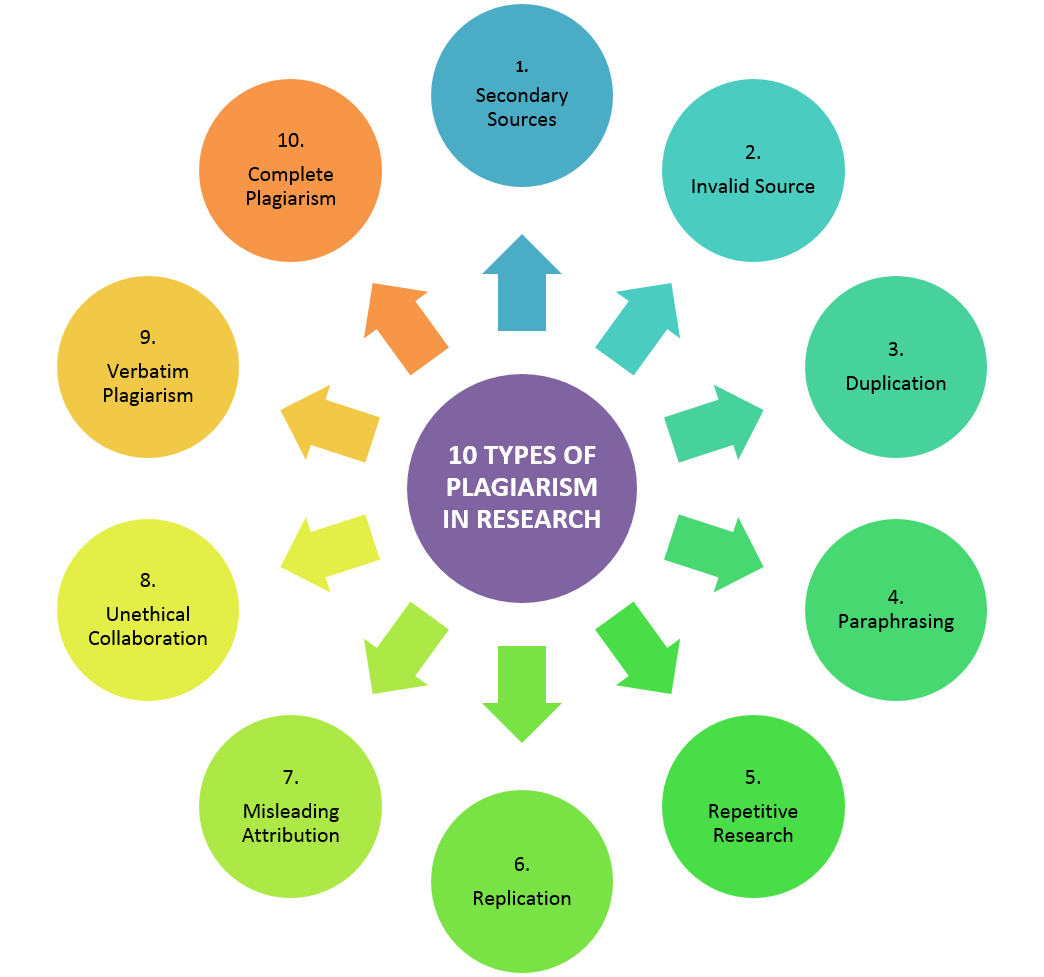
Ten types of plagiarism are (Turnitin)


1. Clone :- Submitting another’s work, word –for-word as one’s own. It is also considered by MLA as the most blatant form of plagiarism. 

2. CTRL-C :- It contains a significant portion of text from a single source without alterations. It is the second most used by people.

3. Find –Replace :- changing key words and phrases but retaining the essential content of the source.

4. Remix :- In this type a researcher/student paraphrases from multiple sources, made to fit together. 

5. Recycle :- A student/researcher borrows generously from the writer’s previous work without citation. 

6. Hybrid :- combines perfectly cited sources with copied passages without citation.

7. Mashup :- Mixes copied material from multiple sources. 

8. 404 Error :- includes citations to non-existent or inaccurate information about sources.

9. Aggregator :- it includes proper citation to sources but the proper contains almost no original work.

10. Re-tweet :- includes proper citation, but relies too closely on the text’s original wording and/or structure.

Consequences :

 Importance of High Standards in Documentation

  • Complex societies depend on well-informed citizens and strive to maintain high standards of quality and reliability in public documents.

  • Responsible writers carefully compose their work and cite sources to recognize others’ contributions.

  • Proper documentation helps discourage the spread of errors and allows readers to verify the credibility of references.

2. Negative Impact of Plagiarism on Public Values

  • Plagiarism undermines the trust and integrity of the written work.

  • Readers often feel skepticism and outrage when plagiarism is detected.

  • It damages the public’s confidence in trustworthy information.

3. Consequences for Writers

  • Plagiarists are viewed as either incompetent or dishonest.

  • Professional writers (e.g., journalists) face severe consequences, such as job loss, public embarrassment, and permanent damage to their careers.

  • These consequences highlight the public's emphasis on reliable and authentic information.

4. Consequences for Students

  • Students caught plagiarizing face penalties, such as assignment failure, course failure, or expulsion.

  • Plagiarism harms teacher-student relationships by fostering suspicion instead of trust.

  • It undermines institutional credibility, as fraudulent degrees damage the reputation of educational institutions.

  • Example: A physician with a degree obtained through fraud would not be trusted.

  • Plagiarism deprives students of the opportunity to develop research and writing skills essential for academic and professional success.

5. Personal and Professional Harm from Plagiarism

  • Plagiarism betrays the personal element in writing, as writing is tied to individual identity and self-expression.

  • According to Mark Rose, ownership of written words is deeply connected to our sense of self and individuality.

  • Skill in writing fosters self-discovery, personal voice, and unique approaches in writing.

6. Need for Awareness and Avoidance

  • Students must understand the importance of avoiding plagiarism.

  • Writing a research paper involves learning how to collect, analyze, and present information, which is crucial for various careers.

  • Careers in law, journalism, engineering, public policy, and other fields require this skill set.


Unintentional Plagiarism : 

Purpose of a Research Paper

  • A research paper combines previous research with the writer's own ideas.

  • Borrowed material (words, facts, ideas) must be properly documented and not presented as original.

Definition of Unintentional Plagiarism

  • Occurs when borrowed material is not acknowledged due to lack of awareness or poor note-taking practices.

  • Example: Copying content word-for-word from an encyclopedia or other sources without realizing it constitutes plagiarism.

Common Causes of Unintentional Plagiarism

  • Failure to document direct quotations, paraphrases, or ideas from other sources.

  • Poorly maintained notes that fail to distinguish between:

    1. The writer’s original ideas.

    2. Summaries or paraphrases of others’ ideas and facts.

    3. Exact wording copied from sources.

  • Forgetting the source of content in poorly marked or unmarked notes.

  • Presenting exact wording as original, even with a citation, if quotation marks are missing.

Electronic Note-Taking

  • Copy-pasting without adding quotation marks around the borrowed content can lead to plagiarism.

  • Properly mark all quotations in electronically kept notes.

Language Barriers

  • In second-language writing, students may copy sentence structures to avoid grammatical errors.

  • This practice may inadvertently lead to plagiarism of the author’s words, expressions, ideas, or information.

Preventing Unintentional Plagiarism

  • Keep clear and organized notes, distinguishing between quotations, paraphrases, and original ideas.

  • Use quotation marks and citations when borrowing exact words.

  • Record only quotations when conducting substantial research, especially for beginners.

Actions if Unintentional Plagiarism Occurs

  • If accidental plagiarism is realized after submission, report it to the instructor immediately.

  • Reporting the issue removes the element of fraud.

  • Consequences may include receiving a lower grade, but this is preferable to failing a course or expulsion.


FORMS OF PLAGIARISM :


  • Repeating or Paraphrasing wording without acknowledging the source 

  • Taking a particularly Apt Phrase without acknowledging the source

  • Paraphrasing an argument or presenting a Line of Thinking

  • When you have ulterior motive 

  • Using other person's idea s as your own to get better grade or gain some other advantage which may or may not be academic 

  • Self-plagiarism: If you use arguments from your previously published article in a new research paper, you must cite your own work. 


Que : In your opinion, why is Academic Integrity necessary?


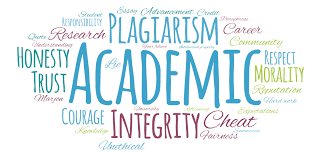
Academic integrity is a cornerstone of education and research, fostering trust, respect, and ethical behavior. Academic integrity is essential for maintaining the credibility of education systems, fostering ethical growth, and ensuring societal progress. It is not just about following rules but about building a foundation of honesty and responsibility that lasts a lifetime.


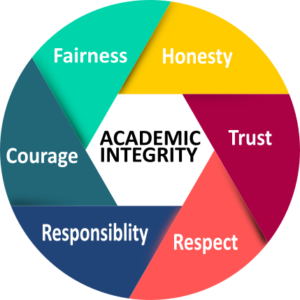
Ethical Codes to Maintain Academic Integrity :

  1. Honesty

    • Be truthful in your work.

  2. Trust

    • Build a supportive and reliable environment.

  3. Fair Treatment

    • Ensure everyone gets equal opportunities.

  4. Respect

    • Value others' ideas and efforts.

  5. Responsibility

    • Take ownership of your actions and follow academic rules.

  6. Courage

    • Stand up for what is right, even when it’s difficult.


Why Academic Integrity Matters

  • Promotes Originality

    • Encourages students to share original ideas and properly credit sources.

  • Supports Lifelong Learning

    • Honesty isn’t just about avoiding punishment; it’s a value that strengthens learning and personal growth.

  • Strengthens Reputation

    • Academic integrity enhances an institution’s reputation and helps researchers grow academically.

  • Protects Learning Opportunities

    • Plagiarism, cheating, and shortcuts take away chances to truly learn and improve.

    • Doing your own work allows you to receive accurate feedback and support for your growth.


Reference : 


MLA Handbook for Writers of Research Papers. 7th ed., Modern Language Association of America, 2009.


Paper No. 209

  Code 22416: Paper 209: Research Methodology Plagiarism: Trap –Consequences,Forms,  Types, and How to Avoid It Table of Content :  Personal...