Monday, November 11, 2024

Exploring Marginalization in Shakespeare’s Hamlet and Stoppard’s Rosencrantz and Guildenstern Are Dead

 Exploring Marginalization in Shakespeare’s Hamlet and Stoppard’s Rosencrantz and Guildenstern Are Dead


This blog is part of thinking activity.

- Assigned by Dilip Barad Sir.

More Reading :Teacher's Blog

Questions for Reflection and Analysis


1. Marginalization in Hamlet

o Describe how Rosencrantz and Guildenstern represent marginal figuresin Hamlet. How does Hamlet’s reference to Rosencrantz as a “sponge”reflect their expendability in the power dynamics of the play?


Ans

Rosencrantz and Guildenstern represent marginal figures in Hamlet, as their roles primarily serve to fulfill the needs of the play’s powerful characters, especially King Claudius and Prince Hamlet. They lack significant agency or personal motives; instead, they act as tools used by others to further political or personal agendas. This marginalization reflects their expendability and insignificance within the Danish court’s hierarchy. Their identity and purpose are essentially absorbed by the demands of the powerful, making them mere pawns in the grander schemes at play.

Hamlet’s description of Rosencrantz as a “sponge” is particularly telling. In Act 4, Scene 2, Hamlet confronts Rosencrantz with the line:

Hamlet: “Ay, sir, that soaks up the King’s countenance, his rewards, his authorities. But such officers do the King best service in the end: he keeps them, like an ape an apple, in the corner of his jaw; first mouthed, to be last swallowed. When he needs what you have gleaned, it is but squeezing you, and, sponge, you shall be dry again.”

Here, Hamlet’s metaphor is cutting. By comparing Rosencrantz to a sponge, he suggests that Rosencrantz absorbs the rewards, attention, and authority granted by the King, but only temporarily. Once the King has no further use for him, he’ll be "squeezed dry" — all his value extracted, discarded without a second thought. This description not only reflects Rosencrantz’s expendability but also comments on the broader dynamics of power in the court, where loyalty and service do not ensure respect or safety but rather subject one to manipulation and abandonment.

This metaphor highlights how individuals like Rosencrantz and Guildenstern, who lack status or independent purpose, are manipulated by those in power. Their fate — ultimately leading to an unceremonious death on behalf of the King’s agenda — underscores the tragic consequences of their marginalization. Thus, Hamlet’s view of Rosencrantz as a “sponge” encapsulates how minor figures in Hamlet are both used and disregarded, showing the ruthless disposability of those who are merely instruments in a larger power structure.


2. Modern Parallels to Corporate Power

o The passage compares Rosencrantz and Guildenstern to modern workersimpacted by corporate downsizing and globalization. Reflect on thisparallel: How does their fate in Hamlet mirror the displacementexperienced by workers when multinational companies relocate ordownsize?

Ans.

The parallel between Rosencrantz and Guildenstern’s fate in Hamlet and the displacement faced by modern workers affected by corporate downsizing and globalization is striking. In both cases, individuals are marginalized and treated as expendable. Rosencrantz and Guildenstern, though friends of Hamlet, are quickly manipulated by King Claudius into serving his needs, without regard for their own safety or agency. Ultimately, they are dispatched to England with a letter (unknown to them) ordering their deaths, symbolizing how power dynamics render them dispensable in the court’s larger scheme.

This mirrors the experience of workers in today's globalized corporate world. Employees often invest years of loyalty, expecting a stable career and a return on their commitment. Yet, when corporate restructuring or financial goals demand it, they can be laid off or displaced without prior notice. The decision is “not personal—just business,” as companies may relocate, automate, or downsize, leaving loyal employees to bear the brunt of choices made solely for profitability.

The article also emphasizes that Rosencrantz and Guildenstern’s passive role in their fate, as they blindly follow orders, resonates with the experience of modern employees who, due to limited power within large corporations, often feel they have little control over decisions impacting their lives. Just as Rosencrantz and Guildenstern’s existence is marked by a lack of autonomy, modern workers often navigate a system where they are subject to the whims of an indifferent corporate structure that prioritizes financial objectives over individual well-being.


3. Existential Questions in Stoppard’s Re-interpretation

o In Rosencrantz and Guildenstern Are Dead, Stoppard deepens theirmarginalization by questioning their existence and purpose. Why mightStoppard emphasize their search for meaning in a world indifferent tothem? How does this mirror the feeling of powerlessness in today’scorporate environments?

Ans.

Stoppard’s emphasis on the search for meaning in Rosencrantz and Guildenstern Are Dead reflects a profound existential questioning, underscoring the characters' marginalization. By portraying them as confused, passive, and largely unaware of their purpose in the grand scheme of Hamlet, Stoppard challenges the audience to reflect on the human condition—our need to find meaning and significance in a world that seems indifferent to us. Rosencrantz and Guildenstern repeatedly question their own existence and actions, but they receive no clear answers, which deepens their sense of displacement. This existential search for purpose highlights the fragility of human agency when confronted with larger, uncontrollable forces—such as fate, power, and the whims of those in authority.

In the context of today's corporate environments, Stoppard's portrayal mirrors the growing feelings of powerlessness that many workers experience. In modern workplaces, particularly within large, multinational companies, employees often feel like cogs in a vast machine. The systems and structures in place can make individuals feel insignificant or invisible, much like Rosencrantz and Guildenstern. The search for purpose and fulfillment can become muddied by the focus on profit, productivity, and corporate goals that seem detached from human needs and well-being. As workers are often treated as replaceable, their own searches for meaning in their roles can feel as elusive as Rosencrantz and Guildenstern’s pursuit of understanding. Stoppard's play thus resonates with the anxieties of contemporary workers, highlighting the existential struggles of trying to find meaning in a world or system that seems uninterested in individual significance.


4. Cultural and Economic Power Structures

o Compare Shakespeare’s treatment of power in Hamlet to Stoppard’s reimagining. How does each work critique systems that marginalize “little people”? How might Stoppard’s existential take resonate with contemporary issues of job insecurity and corporate control? 

Ans.

In both Hamlet and Stoppard’s Rosencrantz and Guildenstern Are Dead, power structures are explored in ways that critique the treatment of marginalized individuals. Shakespeare’s Hamlet portrays the traditional hierarchical structures of royal power, where figures like Rosencrantz and Guildenstern (and even Hamlet himself, to some extent) are at the mercy of political and social systems far beyond their control. The play critiques how power in a royal court is absolute and often oppressive. Characters like Rosencrantz and Guildenstern are exploited by Claudius to serve his political agenda, with little regard for their humanity or individual desires. Hamlet, despite being the prince, is also trapped in a political struggle, unable to act freely due to the influence of the court and his moral conflict with revenge.

Stoppard’s reimagining in Rosencrantz and Guildenstern Are Dead takes these themes to an existential level, questioning the role of individuals within broader societal and power structures. The play shifts the focus from the political dynamics of Shakespeare’s Hamlet to the mundane, absurd lives of the two minor characters. Here, Stoppard critiques the systems that marginalize the "little people" by stripping away the grandeur and drama of Shakespeare’s original narrative, focusing instead on the banality of their existence and their lack of agency. Rosencrantz and Guildenstern’s existential crises about their purpose and their inability to control their fate parallel the dehumanizing effects of a system where individuals are reduced to mere tools for those in power.

Stoppard’s existential take resonates with contemporary issues of job insecurity and corporate control. In today’s corporate environment, workers often find themselves in similar positions to Rosencrantz and Guildenstern—caught in a system that seems indifferent to their personal well-being. Much like the two characters who are unable to grasp the meaning of their existence, workers in large, bureaucratic corporations often feel trapped in jobs that offer little personal fulfillment or control over their future. Stoppard’s exploration of their lack of agency highlights how individuals, no matter their skill or potential, can be relegated to a marginal existence when they are at the mercy of larger, impersonal systems—whether it be the monarchy in Hamlet or corporate structures in the contemporary world.

Both works critique how hierarchical systems—whether political or economic—undermine individual autonomy and marginalize those without power, and Stoppard’s existential interpretation deepens the sense of helplessness, making the critique even more relevant to modern issues of corporate exploitation and job insecurity.


5. Personal Reflection 

o How does the marginalization of Rosencrantz and Guildenstern in Hamlet relate to the modern experience of being seen as a dispensable “asset”? Reflect on how these parallels shape your understanding of Cultural Studies and power dynamics.

Ans.

The marginalization of Rosencrantz and Guildenstern in Hamlet offers a compelling reflection on the modern experience of being seen as a dispensable “asset” in a system driven by power dynamics. In Shakespeare’s play, Rosencrantz and Guildenstern are secondary characters, seemingly loyal to the crown, yet they are easily manipulated and discarded when their usefulness expires. This reflects a reality where individuals, regardless of their value, can be exploited for the benefit of those in power and cast aside when no longer needed.

This sense of being an expendable "asset" resonates deeply with the contemporary experience of many workers, especially in corporate environments, where job security is often precarious. In the modern workplace, workers are frequently reduced to a set of skills or functions that can be replaced if they no longer align with the company’s interests, much like Rosencrantz and Guildenstern, whose roles are dictated by external forces. The notion of being an asset, rather than a person with agency or intrinsic worth, reflects a dehumanizing aspect of modern power structures, much like the way the two characters are used and discarded by the political machinery in Hamlet.

These parallels shape my understanding of Cultural Studies by highlighting how power structures are often invisible yet pervasive, shaping individuals’ lives and identities. Cultural Studies examines how power is distributed and how it impacts different groups, particularly marginalized ones. The treatment of Rosencrantz and Guildenstern in Hamlet—as pawns in a game of political power—mirrors the modern experience of workers, often defined by their function rather than their individuality or personal aspirations. In this context, power is not just a matter of control over land or wealth, but also of shaping identities and determining worth.

In a Cultural Studies framework, examining these power dynamics helps to reveal how individuals in both Shakespeare’s time and today are controlled through systems that reduce their humanity and potential. It calls attention to the need to question and challenge these systems of power that marginalize people based on their utility rather than their intrinsic value. By reflecting on the lives of Rosencrantz and Guildenstern, I’m reminded of the importance of recognizing our own agency within these structures and pushing against the forces that seek to define us as mere assets or commodities.


Reference :

Barad, Dilip. “Thinking Activity: Exploring Marginalization in Shakespeare’s Hamlet and Stoppard’s Rosencrantz and Guildenstern Are Dead.” Thinking Activity: Exploring Marginalization in Shakespeare’s Hamlet and Stoppard’s Rosencrantz and Guildenstern Are Dead, October 2024, https://www.researchgate.net/publication/385301805_Thinking_Activity_Exploring_Marginalization_in_Shakespeare's_Hamlet_and_Stoppard's_Rosencrantz_and_Guildenstern_Are_Dead. Accessed 11 November 2024. 

Kumar, Sanjeev. “"HAMLET" AND "ROSENCRANTZ AND GUILDENSTERN ARE DEAD" - A TEXTUAL STUDY.” International Journal of Novel Research and Development(IJNRD) IJNRD.ORG, 1 January 2023, https://www.ijnrd.org/papers/IJNRD2301171.pdf. Accessed 11 November 2024.


Thank You..

Sunday, November 10, 2024

Exploring Contemporary Cultural Concepts


Khushi Rathod

PG Registration No. 5108230039


This blog is a part of the worksheet task of Cultural Studies which based  to critically engage with key concepts in contemporary cultural studies using AI as a learning tool.

- Assigned by Dr. Dilip Barad sir.


For the more information reading : Teacher's Blog


 1)Slow Movement :


The Slow Movement in cultural studies refers to a social and cultural response to the fast-paced nature of modern life, particularly in areas such as work, food, education, and lifestyle. It advocates for slowing down to enjoy, understand, and connect more deeply with what one does, in contrast to the relentless speed associated with consumer culture and technological advancement.

Definition

The Slow Movement emerged in the late 20th century as a critique of “speed culture.” It emphasizes mindful, deliberate actions and choices, aiming to foster quality, depth, and intentionality in various aspects of life. Although it originated with the Slow Food Movement in Italy in the 1980s, it has expanded to include Slow Cities, Slow Travel, Slow Education, and Slow Media.

The artical In Praise of Slowness : Challanging the Cult of Speed highlights the advantages of a slower pace by saying, “When we slow down, we can savor the moment, focus on what we’re doing, and get more done in the end”​This idea emphasizes the positive impact on productivity and fulfillment.


Example: Slow Food Movement

The Slow Food Movement is a foundational example of this concept. Initiated by Carlo Petrini in Italy in 1986 as a reaction to the proliferation of fast food, it advocates for preserving traditional, regional cuisine and supporting sustainable food production. It promotes savoring food and eating meals as social and cultural experiences, contrasting the speed, uniformity, and environmental degradation often associated with fast food.


This approach aligns with the Slow Movement by preserving cultural diversity, supporting local economies, and encouraging environmentally friendly practices. The foundation highlights the importance of reconnecting with local food sources and ethical consumption, impacting communities positively by strengthening food security and promoting eco-friendly choices.(Honore)


2)Dromology:

Dromology, coined by French philosopher Paul Virilio, is the study of speed and its effects on society. It derives from the Greek word dromos (race or running) and examines how the acceleration of technology and life impacts culture, politics, and human experience.

Key Characteristics

  1. Acceleration of Technology and Information: Dromology explores how rapidly advancing technology changes how we perceive and interact with the world.
  2. Space-Time Compression: Speed diminishes spatial and temporal distances, altering relationships, communication, and societal functions.
  3. Military Influence: Virilio emphasizes how the development of speed is historically linked to military innovations, affecting civilian life.

Example

The internet exemplifies dromology: instantaneous communication and information access have revolutionized human interactions and societal functions.Platforms like Twitter (now X), Facebook, and Instagram allow news and opinions to circulate globally in seconds. This speed can have profound effects: during crises, social media can mobilize global responses, but it also leads to the rapid spread of misinformation, increasing societal anxiety and polarization.


Contemporary Relevance and Implications

In modern society, the constant acceleration in communication and technology impacts work-life balance, mental health, and privacy. Virilio warned of "dromocratic" control—power through speed—affecting everything from politics to individual freedoms as rapid information flows shape public opinion and reduce attention spans.


3)Risk Society :

The concept of Risk Society, developed by sociologist Ulrich Beck, describes a modern society increasingly preoccupied with managing and mitigating risks, many of which are byproducts of industrial and technological advancement. Unlike traditional societies that focused on natural dangers, the Risk Society confronts man-made risks, such as pollution, nuclear power, and climate change.

Key Characteristics

  1. Manufactured Risks: Risks are often the unintended consequences of modernity (e.g., environmental degradation, health risks).
  2. Global Scope: These risks transcend borders, making them global concerns.
  3. Institutional Responses: Governments and organizations attempt to manage these risks through regulations, technologies, and policies.

Example

Climate change exemplifies the Risk Society, as it’s a global issue requiring international cooperation and technological solutions to manage risks.


Contemporary Relevance and Implications

In today’s world, the concept of Risk Society is highly relevant. For instance, technological advancements in artificial intelligence introduce ethical and security risks, while global pandemics demand worldwide risk management strategies. The emphasis on constant risk management impacts social structures, governance, and individual psychological states, as society becomes increasingly anxious and reliant on expertise to navigate uncertainties.


4) Postfeminism :

Postfeminism in cultural studies refers to a complex, sometimes contradictory, perspective on feminism that emerged in the late 20th century, especially within Western media and pop culture. It often suggests that feminism has achieved its goals, implying women now have full equality, which sometimes leads to criticisms of overemphasis on individual empowerment over structural issues.

Example and Relevance to Contemporary Society

A prominent example of postfeminism in contemporary society is found in popular media and lifestyle branding, particularly in the portrayal of female characters in films and TV shows like Sex and the City and Legally Blonde. These portrayals often highlight women who embrace both professional ambitions and traditional femininity, suggesting that women can be empowered through fashion, beauty, and personal success. Such characters are often portrayed as strong and independent but also embrace consumerism and traditional femininity, blending empowerment with personal choice.


5) Hyperreal : 

The concept of the hyperreal was introduced by French sociologist and philosopher Jean Baudrillard in his book Simulacra and Simulation (1981). Hyperreal refers to a condition in which representations or simulations of reality become so convincing and pervasive that they are often more real—or more intense—than actual reality. In hyperreality, it becomes increasingly difficult to distinguish between what is “real” and what is a copy or simulation, as copies and images take on a life of their own, independent of any original source.

Example:


Here is a conceptual image that represents the idea of hyperreality, blending reality and simulation. It portrays a person interacting with a highly edited version of their life on a social media feed, while their reflection shows an idealized, distorted version of themselves, highlighting the blurry boundaries between real life and media representations. Let me know if you'd like any adjustments or further details!

Contemporary Relevance and Implications

In the digital age, hyperreality is pervasive in social media, virtual reality, and digital avatars, as people often engage with curated images and simulated environments. This can impact perceptions of self and reality, sometimes leading to a preference for simulations over real experiences, which raises questions about identity, authenticity, and mental well-being in society.

'Hyperreality' and Popular Indian Films :

Krrish (2006)


The character Krishna, possessing inherited superhuman abilities from an alien encounter, embodies hyperreality. His powers reflect a simulated world where science fiction and fantasy intertwine, crafting a superhero myth in an Indian cultural context. (Antony et al.)


PK (2014)


The alien protagonist observes human religious practices with an outsider’s perspective, exposing the contradictions and constructed beliefs within society. This hyperreal perspective critiques and reshapes audiences' understanding of religion and social norms through simulated yet relatable experiences.(Antony et al.)


6) Hypermodernism :

Hypermodernism in cultural studies describes a phase of heightened modernity, where rapid technological and social advancements intensify modernist characteristics, pushing them to their extremes. It emphasizes hyper-consumption, a focus on speed, and a sense of fragmentation and uncertainty as core elements.

Key Characteristics

  1. Intensified Consumerism: A focus on excess and immediate gratification through consumption.
  2. Technological Overload: Dependence on digital connectivity, creating an always-on culture.
  3. Fragmentation and Fluidity: A fragmented sense of identity, influenced by rapid changes and information overload.
  4. Anxiety and Uncertainty: An increase in existential anxiety as individuals struggle to keep up with the pace of change.

Example

Social media exemplifies hypermodernism, where constant connectivity, rapid trends, and curated images create a fragmented and often hyper-consumptive experience of reality.

Contemporary Relevance and Implications

In today’s hypermodern society, the relentless pace can lead to psychological stress and identity challenges, as individuals feel pressure to maintain an idealized self-image online. Hypermodernism highlights how the culture of speed and connectivity might erode deeper, more meaningful experiences, leading to a society more driven by instant gratification than by enduring values or community.


hypermodernism architecture :


The clear shell of the new Georgian parliament building in the city of Kutaisi was supposed to represent the transparency of democracy. (Chapple)
 

Architecture plays a big role in shaping corporate culture and power dynamics, especially in buildings belonging to powerful institutions. Many of these buildings use "smart" systems that bring in high-tech tools to improve the building’s performance and make people inside more comfortable. These smart systems include things like sensors, automated controls, and data analysis platforms. Working together, they help run the building smoothly and efficiently.


7)Cyberfeminism :


Cyberfeminism in cultural studies is a theoretical framework that explores the intersections of feminism, technology, and digital culture. Emerging in the 1990s, it examines how the internet and digital spaces can empower women and challenge traditional gender roles, while also analyzing issues such as online harassment and gender biases in tech.

Key Characteristics

  1. Empowerment through Technology: Advocates for using digital spaces to empower women and create supportive networks.
  2. Deconstruction of Gender Roles: Challenges traditional norms by exploring fluidity in digital identities.
  3. Critique of Tech Industry Bias: Addresses gender discrimination in tech and digital culture.


Cyberfeminism highlights an identity crisis for women caught between traditional gender roles and digital self-representation, as cyber spaces blend online identities with offline cultural expectations.Women in cyber literature are often subject to negative labels and stereotypes, highlighting societal gender biases.(Faisol and Fatim)

8)Posthumanism :

Posthumanism in cultural studies is a theoretical approach that challenges traditional concepts of humanism by questioning the centrality of the human being. It explores the integration of technology, biology, and artificial intelligence and how these advancements blur boundaries between humans, machines, and other life forms, expanding our concept of identity and agency.

Contemporary Relevance and Implications

Today, posthumanism is relevant with the rise of AI, bioengineering, and robotics, which challenge notions of identity, autonomy, and ethics. This approach urges society to rethink rights, ethical treatment, and the role of humans in a technologically integrated world, potentially transforming views on agency and personhood.


Indian cinema has always been instrumental in exploring the imaginative and fascinating aspects of fiction. With movies like Robot 2.0 and Go Goa Gone, Bollywood has smoothly journeyed towards post-humanism.

Trans-humans are the ones that resemble humans in form and structure but surpass them in capacities such as improved intelligence, awareness, strength, or durability. Hrithik Roshan starrer Krrish franchise proves to be a promising example in such films. A second instalment of Rakesh Roshan’s film Koi Mil Gaya, this film proves to be the first widely celebrated trans- human movie in India. Krishna, the protagonist inherits his superpowers from his father who in turn was given the powers by an alien. It won nominations in eight Filmfare categories and became Bollywood’s third highest-earning film 2006. In 2016, Remo’d Souza released his superhero film, A Flying Jatt. Aman Dhillon (Tiger Shroff) inexplicably acquires superpowers and fights against pollution waving the flag of a social message.(Singh)


Reference :


Antony, Sinoj, et al. “(PDF) 'Hyperreality' and Popular Indian Films.” ResearchGate, 11 April 2022, http://www.researchgate.net/publication/359864543_'Hyperreality'_and_Popular_Indian_Films. Accessed 10 November 2024.

Chapple, Amos. “Georgia's Hypermodern Parliament Building Faces Uncertain Future.” RFE/RL, 11 May 2021, http://www.rferl.org/a/georgia-kutaisi-parliament-building-abandoned-saakashvili/31248176.html. Accessed 10 November 2024.

ChatGPT https://chatgpt.com/share/6730c77c-4084-8001-b1b1-498b461a47f8

Faisol, M., and Nurul Fatim. “The Face of Arab Women in Cyber-Literature.” Arab Media & Society, 17 March 2024, http://www.arabmediasociety.com/the-face-of-arab-women-in-cyber-literature. Accessed 10 November 2024.

Honore, Carl. In Praise of Slowness: Challenging the Cult of Speed. HarperCollins, 2005. Accessed 10 November 2024.

Honore, Carl. “In Praise of Slowness: Challenging the Cult of Speed.” article honore excerpt praiseslowness.tif, 2005, professionalwritingcourse.wordpress.com/wp-content/uploads/2016/08/article-honore-excerpt-praiseslowness.pdf. Accessed 10 November 2024.

Singh, Supriya. “Post-humanism in Indian cinema.” Media India Group, 23 December 2019, https://mediaindia.eu/cinema/post-humanism-in-indian-cinema/. Accessed 10 November 2024.


Words  : 1983

Images :16

Thank You...

Monday, October 28, 2024

J M Coetzee's Foe


Hello Everyone, 

This blog is a part of thinking activity. 
- Assigned by Megha ma'am.


J. M. Coetzee :


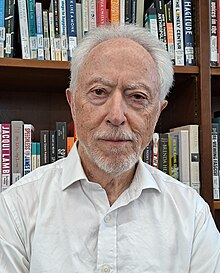
John Maxwell Coetzee[a] FRSL OMG (born 9 February 1940) is a South African and Australian novelist, essayist, linguist, translator and recipient of the 2003 Nobel Prize in Literature. He is one of the most critically acclaimed and decorated authors in the English language. He has won the Booker Prize (twice), the CNA Literary Award (thrice), the Jerusalem Prize, the Prix Femina étranger, and The Irish Times International Fiction Prize, and holds a number of other awards and honorary doctorates.

Coetzee moved to Australia in 2002 and became an Australian citizen in 2006. He lives in Adelaide, South Australia. He is patron of the J. M. Coetzee Centre for Creative Practice at the University of Adelaide. His most recently published book is The Pole and Other Stories (2023).

Major Work :

- Dusklands(1974)
- In the Heart of the Country(1977)
- Waiting for the Barbarians(1980)
- Life & Times of Michael(1983)

" We must cultivate, all of us, a certain ignorance, a certain blindness, or society will not be tolerable."
- J.M. Coetzee

Foe :

- 1986 novel set in early 18th Century.
- A satirical reinvention of Daniel Defoe's Robinson Crusoe and also contains minimal plot of it.
- Novel contains 4 Chapters.

Characters :

  • Susan Barton 
  • Cruso
  • Friday
  • Mr.Foe
  • Daniel Foe
  • Young Girl
  • Amy


Write a blog on comparative and critical analysis of Daniel Defoe’s ‘Robinson Crusoe’ and J. M. Coetzee’s ‘Foe’.

Ans


Introduction :

Robinson Crusoe by Daniel Defoe, published in 1719, is often hailed as one of the first novels in the English language and tells the story of a man's survival on a deserted island. In contrast, J.M. Coetzee’s Foe, published in 1986, provides a postcolonial re-imagining of Defoe's novel, deconstructing and challenging the original narrative through the lens of power, voice, and representation.

Comparative and critical analysis of Daniel Defoe’s ‘Robinson Crusoe’ and J. M. Coetzee’s ‘Foe’. :


The Story of Survival and the Question of Authority :

Robinson Crusoe centers on the tale of a man stranded on a deserted island, where he not only survives but asserts his dominance over nature. Crusoe embodies Enlightenment ideals of self-reliance, rationalism, and mastery over the environment, showcasing a Western approach to survival and colonization. Crusoe’s ‘taming’ of the wilderness and the establishment of his own “kingdom” mirror European imperialist ambitions, subtly conveying a message of Western superiority.

In Foe, Coetzee retells Crusoe’s story but from the perspective of Susan Barton, a female castaway who shares the island with Crusoe and his servant Friday. The choice of Barton as the narrator challenges Crusoe’s monopoly on his story, offering an alternate narrative where voices that were once silent, particularly those of women and the colonized, seek to assert themselves. The addition of Susan Barton as a storyteller serves as a critique of the singular authority and authorship that Crusoe’s narrative traditionally enjoys.

Reclaiming the Silenced: The Voice of Friday :

One of the most poignant aspects of Foe is its exploration of Friday’s voice, or rather, his lack thereof. In Defoe’s original work, Friday is a passive character—a ‘savage’ whom Crusoe converts to Christianity and teaches English, reinforcing the colonial narrative of the "civilizing mission." Friday represents the indigenous people of colonized lands, subjugated and voiceless.

Coetzee’s Foe reverses this dynamic by focusing on Friday’s muteness as a symbol of the suppression faced by colonized individuals. In Foe, Friday’s silence is more than just a literal condition; it represents the erasure of his story, language, and identity. Coetzee uses this silence as a powerful metaphor for the silenced histories of colonized peoples. Susan Barton’s attempts to understand and ‘give voice’ to Friday bring forth complex questions: Who has the right to tell someone else’s story? Is it possible to fully understand or represent another’s suffering, especially when it comes from a different cultural and historical background?

Feminist Perspective and the Challenge of Authorship :

In Robinson Crusoe, there is little room for female voices or perspectives; the narrative is dominated by Crusoe’s masculine, colonial gaze. His actions and his survival are the central concerns, while other characters, such as Friday, are simply part of the background that serves his journey.

In Foe, Coetzee introduces Susan Barton, whose presence destabilizes the masculine authority of Crusoe’s story. Barton not only challenges Crusoe’s authority but also disrupts the traditional power dynamics of storytelling. By making Susan a narrator in Foe, Coetzee critiques the male-dominated authorship in literature. Her struggle to get the writer Foe (a representation of Defoe) to accurately tell her and Friday’s story highlights the difficulty of asserting a woman’s perspective in a male-centered narrative.

Susan’s journey also delves into feminist concerns, as she repeatedly finds herself ignored or patronized by the character of Foe, the writer. Her struggle with Foe becomes symbolic of women’s fight to break free from the margins and gain their own voice within a system that often distorts or overlooks them. Through Susan, Coetzee raises essential questions about authority in storytelling: who gets to write history, and how are narratives shaped by those in power?

Colonialism and Postcolonial Critique :

Robinson Crusoe can be read as a testament to colonial attitudes of the early 18th century, emphasizing European dominance, ‘civilization,’ and conversion. Crusoe’s relationship with Friday, framed as an act of rescue and enlightenment, exemplifies the colonial ideology that ‘uncivilized’ societies require Western intervention.

In Foe, Coetzee subverts this colonial ideology by emphasizing Friday’s right to his own identity. The story of Foe reflects postcolonial concerns by acknowledging that the narratives of colonized individuals have been systematically suppressed or rewritten by colonial forces. By giving space to Friday’s silence, Coetzee allows readers to recognize the weight of stories that remain untold. This narrative silence asks us to acknowledge the gaps in our understanding of history, particularly regarding the suffering and resistance of the colonized.

Metafiction and the Construction of Narrative :

Coetzee’s Foe also plays with the concept of metafiction, blending reality and fiction in ways that challenge the reader’s perception of truth in storytelling. By including Daniel Foe (a stand-in for Defoe) as a character, Coetzee draws attention to the process of writing and the construction of narratives. This device forces readers to think critically about how stories are shaped by their authors and question the authenticity of the “true story.”

In Robinson Crusoe, there is little acknowledgment of Crusoe’s biases or of how his perspective shapes the narrative. Foe, on the other hand, openly critiques the idea of an objective, unmediated narrative by showing the process of negotiation and omission involved in writing. Susan’s struggles with Foe to tell her story reflect Coetzee’s critique of the selective nature of historical and literary narratives.

The Role of Language and Communication :

Language is a powerful theme in both novels but is treated differently. In Robinson Crusoe, Crusoe’s teaching of English to Friday symbolizes the imposition of Western culture and values. Crusoe’s belief that English is necessary for communication further reflects colonial ideals, where the colonizer’s language is privileged over native languages.

In Foe, language becomes a tool of power and limitation. Friday’s inability to speak or write English raises profound questions about voice and autonomy. Susan’s inability to communicate with Friday or truly understand him emphasizes the limitations of language and the barriers that prevent genuine connection between cultures. By leaving Friday mute, Coetzee underscores the failure of colonial narratives to fully encapsulate the perspectives of those they dominate, suggesting that some experiences and histories resist translation into the colonizer’s language.

Psychological Depth and Existential Questions :

In Robinson Crusoe, the focus is largely on physical survival and establishing dominion over the island. Crusoe’s psychological struggles are only touched upon, as he remains relatively certain of his purpose and sense of self. His faith in God and his own abilities keep him grounded, offering a straightforward narrative of overcoming hardship through willpower and resourcefulness.

In Foe, Coetzee introduces a more complex, existential layer to survival. Susan Barton grapples with deeper questions of identity, purpose, and autonomy. Her journey is not only about survival but about the struggle to assert her narrative in a world that marginalizes her. This added psychological depth brings forth questions about the meaning of identity, authorship, and the self, pushing readers to consider the inner lives of characters who traditionally serve as ‘others’ in colonial texts.

Identity :

In Robinson Crusoe, Enlightenment values like human reason and control over nature shape Crusoe's journey, which is often seen as a story of independence and personal growth. His transformation on the island reflects the Western idea of self-discovery and progress. 

However, in Foe, this idea of independence is questioned. Susan's journey is less about personal growth and more about gaining control over her own story. Friday’s silence challenges the Western view of individual expression, suggesting that real identity is complex and often suppressed by dominant narratives.

The Use of Intertextuality :

Foe by Coetzee both references and critiques Robinson Crusoe, questioning the assumptions in Defoe’s work and highlighting how colonial literature has traditionally silenced marginalized voices. As a postcolonial response, Foe challenges the idea of historical “truth” through Susan’s struggle to tell her story accurately. 

While Crusoe’s perspective is accepted as fact in Robinson Crusoe, Coetzee shows in Foe that every story is shaped by the narrator’s biases and interests. This aligns with postcolonial critiques, which argue that historical records often distort or leave out the perspectives of colonized people.

Conclusion:

Daniel Defoe’s Robinson Crusoe and J.M. Coetzee’s Foe reflect two contrasting eras of thought: the age of exploration, colonization, and Enlightenment in Robinson Crusoe versus the postcolonial, deconstructive era in Foe. Coetzee’s novel not only reinterprets Defoe’s text but also critiques it, shedding light on issues of voice, identity, and authorship. Through Susan Barton’s challenge to Crusoe’s authority and Friday’s haunting silence, Coetzee questions the ethics of storytelling and the impact of colonialism on narrative history.


Redading Resource :


Thank You for Visiting....

Franz Fanon’s The Wretched of the Earth


Hello Everyone, 

This blog is a part of thinking activity Which assigned by Megha ma'am.

Franz Fanon :- 


Frantz Fanon (1925–1961) was a Martinique-born psychiatrist, philosopher, revolutionary, and influential writer on postcolonialism, critical theory, and Marxism. His work primarily focuses on the psychological and cultural effects of colonization on the oppressed and the colonizers, and he is widely known for his analysis of colonial racism, alienation, and decolonization.

Some key points about his life and work:

1. Early Life : Born in Martinique, a French colony in the Caribbean, Fanon experienced the realities of racial discrimination early in life. He served in the French army during World War II, after which he studied psychiatry in France.

2. Influential Works :

(1) Black Skin, White Masks (1952): Fanon explores the psychological trauma of colonialism, examining how colonized individuals internalize feelings of inferiority imposed by colonial powers. The book discusses issues of race, identity, and self-perception.

(2) The Wretched of the Earth (1961): Written during the Algerian War of Independence, this book examines the brutal violence of colonialism and advocates for the use of violence as a means of achieving decolonization. Fanon analyzes the psychological effects of oppression and argues for the necessity of revolutionary struggle for true freedom.

3. Decolonization and Violence : Fanon viewed decolonization as an inherently violent process, as he believed that colonialism was maintained through force and violence. His advocacy for revolutionary violence was both controversial and influential, especially among anti-colonial movements in Africa, Asia, and Latin America.

4. Legacy and Influence: Fanon’s ideas have had a lasting impact on a range of fields, including critical race theory, postcolonial studies, and social psychology. His work influenced revolutionary leaders and movements worldwide, such as the Black Power movement in the United States and anti-colonial movements across Africa.

Fanon’s theories continue to be central in discussions about race, identity, colonialism, and resistance, especially in contexts where racial and economic inequalities persist.

Major Works :

- Black Skin White Masks(1952)

- A Dying Colonialism (1959)

- The Wretched of the Earth (1961)

- Toward The African Revolution (1964)


Question & Answer:-

1) What is the role of violence in colonialism with reference to the wretched of Earth?

Ans. 

"Decolonization, therefore, implies the urgent need to thoroughly challenge the colonial situation. Its definition can, if we want to describe it accurately, be summed up in the well-known words: “The last shall be first.” Decolonization is verification of this. At a descriptive level, therefore, any decolonization is a success."

Frantz Fanon’s "The Wretched of the Earth" critically examines colonialism, which is when one country takes control of another to set up settlements and exploit its people and resources. Colonialism began in Europe around the 15th century and still exists in some parts of the world. Fanon, who was born in Martinique, a French colony in the Caribbean, had a personal understanding of colonialism. In his book, he focuses on how colonialism has oppressed and exploited much of the Third World through racism and violence. When Fanon wrote this book in 1961, many colonized nations were fighting for independence, dealing with the lasting harm from centuries of exploitation. The The Wretched of the Earth serves as a guide for understanding the experiences of the colonized, and Fanon argues that the oppressive, racist, and violent system of colonialism can only be stopped by meeting it with force.

"The people who in the early days of the struggle had adopted the primitive Manichaeanism of the colonizer—Black versus White, Arab versus Infidel—realize en route that some blacks can be whiter than the whites, and that the prospect of a national flag or independence does not automatically result in certain segments of the population giving up their privileges and their interests."

Fanon describes colonialism as a system that divides people into “black” and “white” based on a belief called Manichaeanism, which originates from an old Persian religion based on the struggle between light and dark. Fanon says colonialism adopts this view by seeing the colonized (often black) as evil and immoral, while the white colonizers are seen as good. Colonialism, therefore, sees the colonized as savages and even animals, stripping them of humanity. According to Fanon, colonialism creates two separate worlds: the colonist’s clean, well-kept area and the crowded, neglected “native” quarters. Colonialism, he argues, is built on this idea of separating and oppressing people based on skin color.

Besides being racist, Fanon says colonialism is also a system of violence, designed to control the colonized by force. From the start, colonial control was established through violence, and it continues this way. The colonized world is divided by military and police forces, which maintain control by intimidating and threatening violence. For those living under colonial rule, there’s a constant sense of fear—they know they can be arrested, beaten, or starved at any moment. This violence doesn’t stop once colonial rule is set up; it’s always present in the lives of the colonized.

"Within the political parties, or rather parallel to them, we find the cultured class of colonized intellectuals. The recognition of a national culture and its right to exist represent their favorite stamping ground. Whereas the politicians integrate their action in the present, the intellectuals place themselves in the context of history. Faced with the colonized intellectual’s debunking of the colonialist theory of a precolonial barbarism, colonialism’s response is mute."

Fanon calls this ongoing violence “atmospheric violence,” a constant tension that never goes away. He believes that this kind of violence shows that colonialism can’t be defeated through peace or negotiation. Instead, the colonized instinctively know that they must use force to achieve freedom. For them, violence is a way to cleanse themselves from the feelings of inferiority that colonialism has forced upon them. In short, Fanon argues that since colonialism is based on violence, it must be resisted with violence.


(2)  Describe what Manichaeism means in a colonial context.

Ans.

A major religion founded in Persia during the 3rd century, which is primarily concerned with the struggle between light (good) and dark (evil) forces. Fanon uses Manichaeanism as an analogy for colonialism. The colonial world is a “Manichaean World,” he claims, that is divided into the colonist—or the light and good—and the colonized—or the dark and evil. This basic belief in the evil of Africans is the basis for the rampant racism that plagues colonial society.

The Manichaeanism of colonial society is left intact during decolonization, only the colonists are the evil ones. The colonized are “penned in” by colonial society, and the only place they are free is in their dreams. Each night the colonized run and jump freely, building muscles and aggressive energy, but the only place they can release this aggression during waking hours is on their own people. This aggression pits black against black, Fanon says, and places the colonized subject is a continual state of tension. The colonized must always be on guard and be careful not to step out of line, and they are always presumed guilty by the colonists. Yet the colonized do not believe they are guilty and do not accept the colonists as an authority, so they are, understandably, always tense.

This colonial world, Fanon says, “is a Manichaean world,” where the colonist makes the colonized into the epitome of evil. To the colonists, the colonized have no values or ethics and their culture and traditions are the mark of evil. This mark of evil has been answered with Christianity—the “white man’s Church”—which, instead of calling the colonized to God, has called them to the ways of their oppressors. Manichaeanism serves to dehumanize the colonized; they are reduced to animals and referred to by the colonists in “bestiary” terms.

Those who embrace the Manichaeanism of the colonizer and believe in black against white realize that “some blacks can be whiter than whites, and that the prospect of a national flag or independence does not automatically result in certain segments of the population giving up their privileges and their interests.” There are those who will profit considerably from war at the expense of those who sacrificed so freely. While a revolution may banish colonial oppression, there is still another system of oppression building. The people of the nation must abandon their simple view of the oppressor, Fanon says, as it is changing right in front of them.

"The people who in the early days of the struggle had adopted the primitive Manichaeanism of the colonizer—Black versus White, Arab versus Infidel—realize en route that some blacks can be whiter than the whites, and that the prospect of a national flag or independence does not automatically result in certain segments of the population giving up their privileges and their interests."(Chapter 2: Grandeur and Weakness of Spontaneity)


3) Write a short note on the title “The Wretched of the Earth”.

Ans. The title The Wretched of the Earth reflects the marginalized, oppressed, and colonized people whom Frantz Fanon addresses in his groundbreaking 1961 work. The term "wretched" highlights the suffering, dehumanization, and social degradation experienced by those subjected to colonial rule. It underscores the psychological and physical damage inflicted upon colonized populations, creating a sense of alienation and self-hatred.

key Themes :

1) Colonialism, Racism, and Violence: 

Fanon argues that colonialism dehumanizes the colonized, leading to violent resistance as the oppressed reclaim their dignity and identity. Racism, a tool of colonial oppression, fosters division and perpetuates violence, suppressing native cultures and reducing people to "the wretched."

"The colonized intellectual should not be concerned with choosing how or where he decides to wage the national struggle. To fight for national culture first of all means fighting for the liberation of the nation, the tangible matrix from which culture can grow. One cannot divorce the combat for culture from the people’s struggle for liberation. For example, all the men and women fighting French colonialism in Algeria with their bare hands are no strangers to the national culture of Algeria. The Algerian national culture takes form and shape during the fight, in prison, facing the guillotine, and in the capture and destruction of the French military positions."

2) Oppression and Mental Health: 

Fanon, a psychiatrist, explores the psychological impact of colonialism on the mental health of the colonized. The brutalities of colonization lead to alienation, self-doubt, and internalized inferiority among the colonized, reflecting how systemic violence damages both body and psyche.

"When colonization remains unchallenged by armed resistance, when the sum of harmful stimulants exceeds a certain threshold, the colonized’s defenses collapse, and many of them end up in psychiatric institutions. In the calm of this period of triumphant colonization, a constant and considerable stream of mental symptoms are direct sequels of this oppression."

3) Capitalism, Socialism, and the Third World: 

Fanon critiques capitalism for exploiting the resources of the Third World, aligning instead with socialism as a pathway to economic independence and equality. He views socialist models as more aligned with the needs of newly independent nations, offering an alternative to exploitative capitalist structures.

"It is clear therefore that the young nations of the Third World are wrong to grovel at the feet of the capitalist countries. We are powerful in our own right and the justness of our position. It is our duty, however, to tell and explain to the capitalist countries that they are wrong to think the fundamental issue of our time is the war between the socialist regime and them."

4) Decolonization, Neocolonialism, and Social Class: Decolonization, according to Fanon, involves more than political liberation; it requires dismantling the social and economic hierarchies left behind. He warns against neocolonialism, where former colonizers maintain control through economic or cultural influence, and he advocates for a class-conscious approach to avoid replicating colonial inequalities.

" It is among these masses, in the people of the shanty towns and in the lumpenproletariat that the insurrection will find its urban spearhead. The lumpenproletariat, this cohort of starving men, divorced from tribe and clan, constitutes one of the most spontaneously and radically revolutionary forces of a colonized people."

" The struggle for national liberation is not a question of bridging the gap in one giant stride. The epic is played out on a difficult, day-to-day basis and the suffering endured far exceeds that of the colonial period."


5) Culture and the Emerging Nation: 

Fanon emphasizes the need to revive indigenous culture as part of building national identity, empowering the colonized to rediscover and celebrate their heritage. He argues that culture is central to resisting neocolonial influences and fostering unity within emerging nations.

"National culture under colonial domination is a culture under interrogation whose destruction is sought systematically. Very quickly it becomes a culture condemned to clandestinity. This notion of clandestinity can immediately be perceived in the reactions of the occupier who interprets this complacent attachment to traditions as a sign of loyalty to the national spirit and a refusal to submit. This persistence of cultural expression condemned by colonial society is already a demonstration of nationhood." 

In The Wretched of the Earth, Fanon presents a comprehensive critique of colonialism's legacy, calling for a radical overhaul of colonial structures to foster psychological and social liberation for the oppressed.


Reading Resource :


Thank You for Visiting...

Paper No. 209

  Code 22416: Paper 209: Research Methodology Plagiarism: Trap –Consequences,Forms,  Types, and How to Avoid It Table of Content :  Personal...