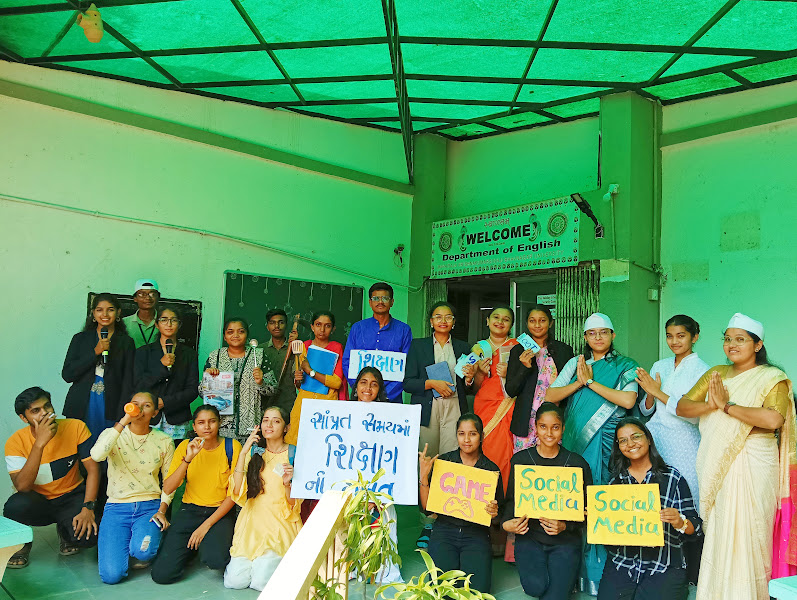
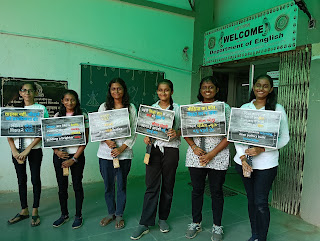
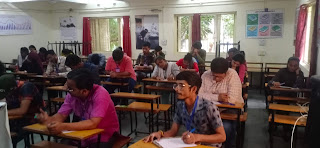
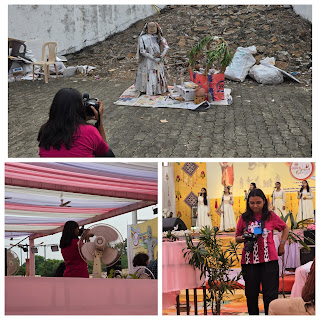
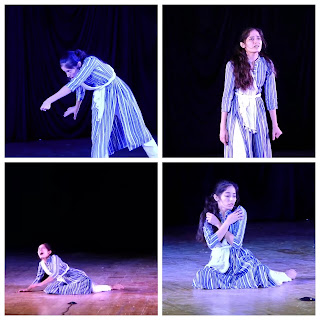
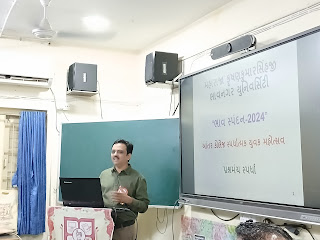
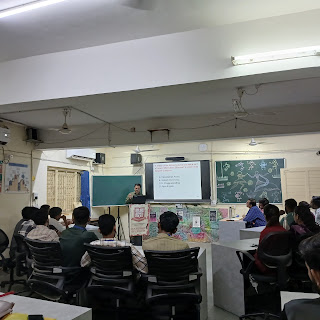
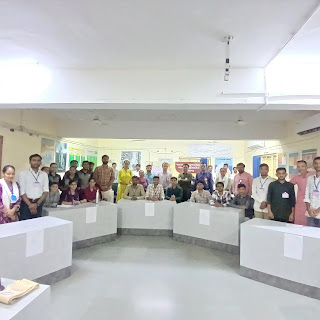
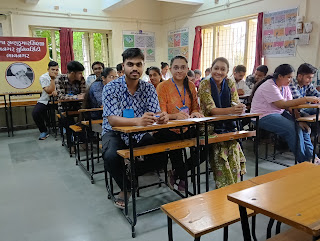
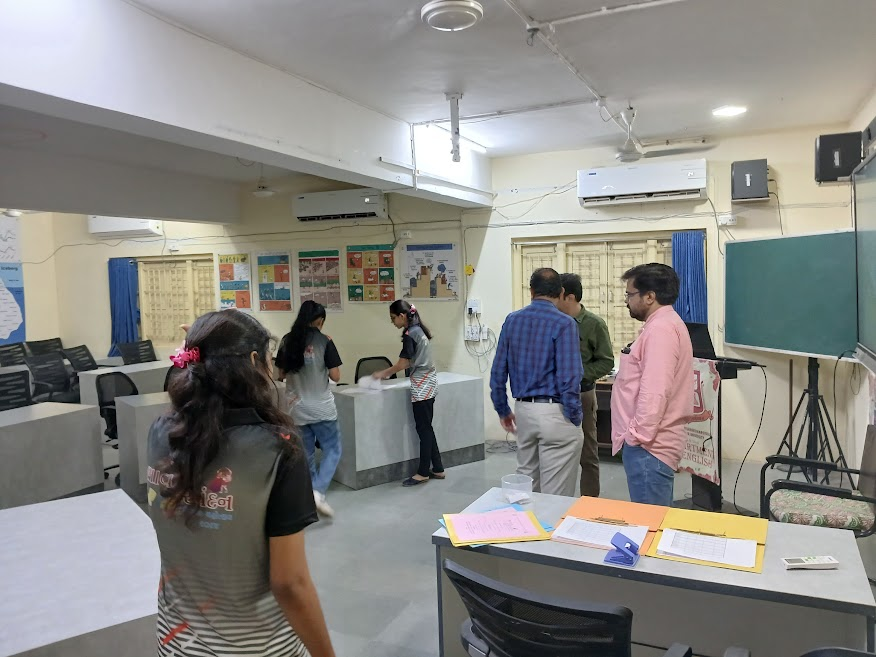
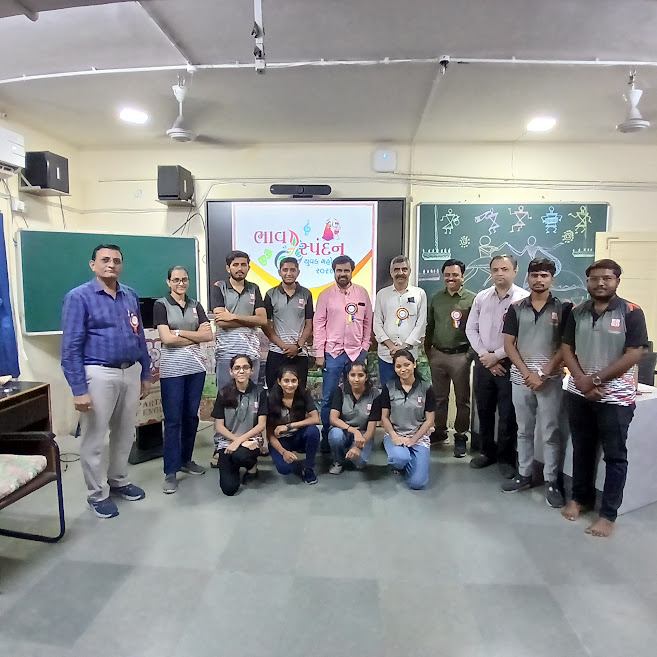
Bhav Spandan Youth Festival 2024


- Accident
- Happiness
- Worship


Bhav Spandan Youth Festival 2024


T.P.Kailasama :
Full Name: Thanjavur Paramasiva Kailasam
Born: July 29, 1884, in Bangalore, India
Family Background: Came from an influential family; his father, T. Paramasiva Iyer, was a respected judge.
Education: Studied in Bangalore.Went to England to study geology at the Royal School of Mines, London.
Interest in Literature: While in London, developed an interest in theatre, influenced by Western dramatists like Shakespeare. Shifted from a career in geology to focus on literature and drama.
Major Contributions: Known as the "Father of Modern Kannada Theatre."Introduced modern themes, breaking away from mythological and religious dominance in Indian theatre.Brought humor, satire, and social commentary into his plays, addressing issues like caste and social inequality.
Famous Works:
Style: Known for blending humor with serious social critique.Connected with both urban and rural audiences. Wrote in both Kannada and English.
Themes: Social justice, especially addressing caste discrimination and the plight of marginalized communities.
Influence: Modernized Kannada theatre.Left a lasting legacy in Indian drama, influencing future generations of playwrights and writers.
Death: July 1946.
1. Interpret all the acts and scenes in brief.
ANS.
In Act I, Karna is leaving the ashram of Parshurama. Though born a Kshatriya, Karna disguised himself as a Brahmin to learn the art of warfare from the strict teacher Parshurama, who only taught Brahmins. Karna excelled as a student, mastering divine weapons and archery. One day, while he was with Parshurama, a bee stung Karna. Although it caused him great pain, Karna stayed silent to avoid disturbing his guru. When Parshurama saw the blood, he realized Karna was not a Brahmin. Furious at being deceived, Parshurama cursed Karna, saying that he would forget his divine weapon skills at the moment he needed them most in battle. This curse later played a key role in Karna's duel with Arjuna. The act ends with this important moment of the curse.
Original Dialogue:
Raama: "Now list, I’ve often told thee, Karna, that Ahimsa proclaims universal truth, yet, in man’s practice of this truth in this world, there is Himsa in Ahimsa and Ahimsa in Himsa."
Act II:
Karna, a skilled archer, arrives at the Royal Stadium and challenges Arjuna, who is known as the best archer. To show his abilities, Karna shoots an arrow through several leaves on a tree. Suyodhana, the Crown Prince, warmly welcomes Karna and encourages him to fight Arjuna. After much debate, Karna expresses a desire to challenge Arjuna’s teachers, but because it is too dark, they must wait until later.
Suyodhana then makes Karna the King of Angaland. Gaandhaara suggests Karna shoot an arrow at Arjuna to show his gratitude, but Karna hesitates. Bheemasena mocks him, calling him low-born. Due to a curse, Karna is unable to shoot.
On the battlefield, Anga feels tense while Maadra urges him to start the fight. Anga realizes he has been concentrating more on his skills than on his duty to the Emperor. Even though Maadra advises him to aim for Arjuna's chest, Anga hesitates, recalling how Krishna once saved Arjuna. Frustrated, he decides not to use his serpent arrow again and instead says he will defeat the enemy with just a simple blade of grass. This worries Maadra, who is concerned about Anga’s mental state.
As the battle goes on, Krishna encourages Arjuna to use his powerful arrow to finish the fight. Arjuna feels conflicted about attacking an unarmed opponent but ultimately chooses to aim at Anga, with tears in his eyes. He shoots an arrow that fatally hits Anga, causing sadness and anger in Maadra and Aswattha. As Anga dies, he reflects on the curses that have plagued him, while Maadra and Aswattha mourn the loss of their friend.
Discuss the Various themes found in “The Curse”.
1) Freindship :
One of the themes in the play is friendship. Karna first meets Duryodhana in Hastinapura during archery lessons with Drona, when he and Arjuna are competing in a weapons trial. Duryodhana recognizes Karna as a warrior equal to Arjuna and sees him as a valuable ally to help counterbalance the Pandavas.
Before the competition, the contestants must announce their backgrounds to ensure they compete against those of similar rank. When Arjuna announces his royal lineage, it’s Karna’s turn. If Karna reveals his background as a charioteer, he would be disqualified from competing against Arjuna. Duryodhana steps in and claims Karna is an Arajna, offering to make him the king of Angas. With this title, Duryodhana argues that Arjuna will have no reason to avoid fighting Karna. Karna accepts the title, which not only makes him a king but also solidifies his loyalty to Duryodhana as a friend. When Karna asks Duryodhana what he wants in return for this favor, Duryodhana simply says, "I want your endless friendship, Karna." This moment establishes a strong bond of friendship between Duryodhana and Karna, setting the stage for important relationships in the Mahabharata.
“Suyodhana : Thy lowly birth, my brother, it will prove No robber of thy noble worth,not while I’m crowned Prince of Kuruland !”...........
HAIL TO THE NEW KING OF ANGALAND ! LONG LIVE THE NEW KING OF [ANGLAND !]
The play begins with Karna finishing his education at Parashurama's ashram. Just as he is about to leave, he loses everything he learned there. While Guru Parashurama is sleeping, Karna rests his head on his lap, showing concern for his teacher. Suddenly, a wasp lands on Karna's thigh and begins to sting him, but he does not want to wake his guru. Despite the pain, Karna endures it silently, and blood starts to flow from his thigh. When Parashurama sees this remarkable patience, he concludes that Karna cannot be the Brahmin he pretends to be; he must actually be a Kshatriya. This angers Parashurama, leading him to curse Karna. The guru realizes, "My love for you makes me see that your life is woven with threads of tragedy."
Because of this curse, whenever Karna tries to rise above his fate and circumstances, he is reminded of his low caste, which humiliates him to the point where he forgets all his skills and knowledge.
Hello Everyone, This blog is a part of thinking activity.
- Assigned by Megha ma'am.
1) Write a critical note on Lakshman by Toru Dutt.
- Assigned by Dr. Dilip Barad Sir.
The aim of this activity is to develop critical thinking and analytical skills by examining the intersections of media, power, and education through the lens of Cultural Studies.
Teacher's Blog : Click Here
🟦 What is Cultural Study ?
Ans.
Cultural studies is a multidisciplinary field that examines how culture influences and reflects identities, power dynamics, and social structures. It emerged in the mid-20th century, drawing on sociology, anthropology, literary studies, and media studies. This discipline explores topics like popular culture, racism, gender, and globalization to understand how meaning is produced and affects daily life.
Cultural studies critically analyzes how language, literature, media, and social behaviors support or challenge dominant beliefs, revealing inequalities in society. It arose as a response to liberal humanism and orthodox Marxism, with thinkers like Matthew Arnold influencing early discussions. Pioneers Richard Hoggart and Raymond Williams associated with the Birmingham Centre for Contemporary Cultural Studies in the 1950s, re-evaluated the elitist nature of traditional literary studies further developed the field.
• How media and power intersect in shaping modern culture.
Ans.
French philosopher Michel Foucault came up with the idea that power is everywhere and affects all parts of society. He thought power keeps changing and can take different forms. For example, when the British ruled India, Indians couldn’t openly talk about their culture or traditions. This meant they couldn’t help write their own history, and the British, who had control, could change the story. That’s why people like Bhagat Singh, who we now see as a hero, were described as terrorists in British history books.
6 Force :
1) Physical Force:
This is the most straightforward way to use power controlling people through force, like when the police or military take action. For example, during protests, the police often try to stop crowds to regain control, instead of thinking about why people are protesting. A recent example happened in Gandhinagar, where people who passed the TET/TAT exams protested because they still didn’t get jobs.
2) Wealth:
Money is used to quiet those who might oppose the government or powerful political or corporate figures in the future.
3) State Action:
Governments have the power to control people through laws, policies, and programs. Today, in the digital age, governments not only take action through these traditional ways but also monitor people online, invading their private lives.
4)Social Norms:
Social norms suggest that people are in charge of the government, but it raises the question of who actually sets these norms. Education trains us to serve our country and society, which we usually agree to. This training shapes our sense of duty and reinforces the existing social order, influencing how we interact with the government and society.
5) Ideas:
Powerful ideas can influence people to change their way of thinking and acting.
6) Numbers:
Large groups of people can create power together. This collective power has been one of the strongest forces in history, leading to revolutions like the French Revolution.
Power is like water—it can change shape and is always moving, just like politics. If we don’t use our power, someone else will take control of it and try to control us. Power grows and spreads in every part of society and politics. If we don’t take action, others will act on us.
• The importance of critical media literacy as a component of education.
Ans.
The video explains the idea of 'Partisanship' and discusses how we can have biases and prejudices about different political beliefs. It also talks about 'Cognitive Dissonance,' which is when two different sets of beliefs or ideas clash within different groups of people.
By the end of the video, we understand that everyone has their own political beliefs and ideologies, which can be different from others. It can be hard to look past these differences because our political views or biases often get in the way.
Our identities are shaped by the society, culture, and community we live in. What we do, how we act, what we eat, wear, and how we talk all shape our cultural identity. This also applies to our political identities, as the people and places around us influence our political views.
Different opinions about political identity can make it harder for people to understand media information. It’s clear that the same news can be understood in completely different ways by people with opposing political views. This difference in interpretation gives media the power to influence public opinion and control the story. While we may think the role of media is to hold politicians accountable, in reality, it is often used as a tool for spreading propaganda by political groups.
Noam Chomsky, a famous linguist and political thinker, believes that the main purpose of mass media, especially in the U.S., is to gain public support for the interests of powerful groups that control both the government and private companies. In his work "Manufacture Consent," he explains how the media is controlled by powerful corporate and political figures. This process is broken down into five steps, known as the 'Five Filters :-
1. Media Ownership
2. Advertising
3. Media Elite
4. Flack
5. The Common Enemy
In detail :
1. Media Ownership: – The main goal of all mass media organizations is to make a profit. "They will support whatever helps them earn more money."
2. Advertising: – The cost of media is higher than what the public pays for, so advertisers cover the extra cost. Advertisers pay for access to the audience. "The media isn't just selling a product to you; they're also selling you, as an audience, to the advertisers."
3. Media Elite :– "Journalism can't challenge those in power because the system encourages cooperation. Governments, big companies, and important institutions know how to control the media by providing exclusive stories and interviews with so-called experts. They make themselves necessary to journalism. If you try to challenge them, you'll be sidelined and lose your access."
4. Flack :– "When a story is uncomfortable for those in power, they fight back: discrediting sources, dismissing stories, and distracting from the issue."
5. The Common Enemy :– "To shape public opinion, you need a common enemy, like communism, terrorists, or immigrants. A 'scary figure' helps control public opinion."
Noam Chomsky says that 20 percent of highly educated people are the ones who make decisions in society. They use the media to control the other 80 percent of the population, who are expected to obey and stay passive. This creates a false sense of democracy in the country.
• Your perspective on what it means to be a "truly educated person" in today’s media-saturated world.
Ans.
According to the Noam Chomsky stresses the importance of self-education for true fulfillment. He believes personal growth comes from self-reflection, asking insightful questions, and exploring new ideas. Independent thinking, questioning assumptions, and learning from different perspectives are key. A truly educated person challenges ideas across disciplines and engages in debates. Self-directed learning empowers individuals to take control of their intellectual development.
In my view, being truly educated means having the ability to think freely and critically while being aware of political and social issues. It involves understanding and representing our community or culture, encouraging us to look deeper into matters and ask questions. True education goes beyond textbook knowledge; it connects ideas to our daily lives. In today’s media-saturated world, this means being able to discern credible information, appreciate diverse perspectives, adapt to change, engage ethically with societal issues, and communicate effectively. Overall, a truly educated person blends knowledge with critical awareness and a sense of responsibility toward their community.
Thank You for visiting.
Code 22416: Paper 209: Research Methodology Plagiarism: Trap –Consequences,Forms, Types, and How to Avoid It Table of Content : Personal...